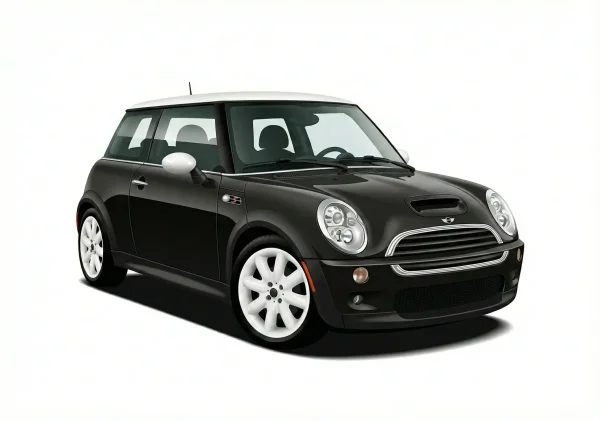
Mini Cooper S
R53 JCW
The restoration diary of a Mini Cooper S R53 rescued from Germany with a dead engine.
Find out why ↓01 — Design
Penned by Frank Stephenson.
When BMW set out to relaunch the Mini in 1999, Stephenson asked himself one question: how would the car have evolved had it changed every decade since 1959? The answer is the R53 — a car that keeps the DNA of the original but with the visual maturity of four imagined decades of evolution.
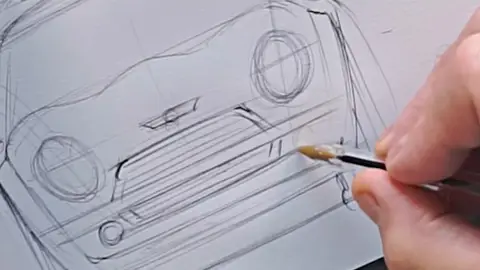
The bulldog face
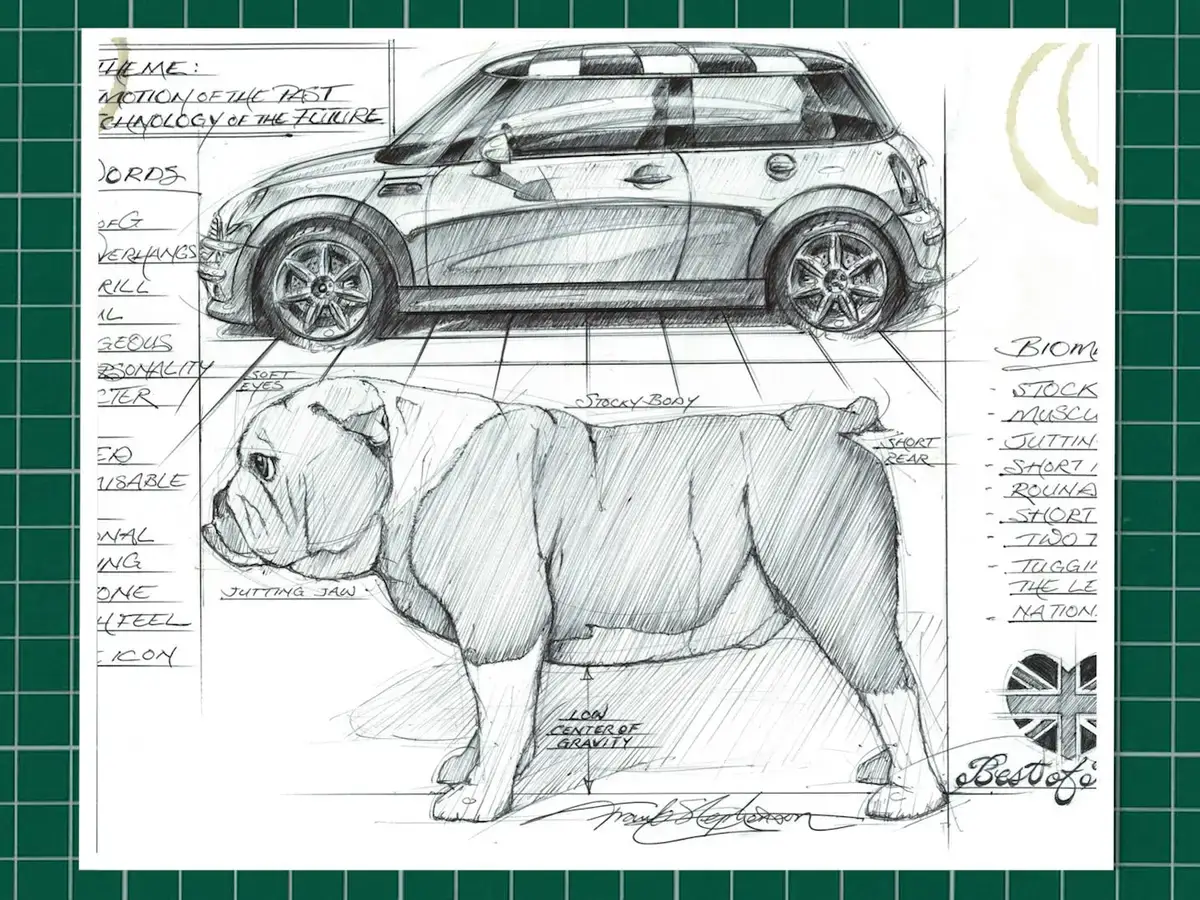
To give the car a recognisable, aggressive identity, Stephenson drew on the British bulldog. The grille was split in two: the upper part mounted on the bonnet, the lower part on the bumper — mimicking the dog's jaw.
The front bumper was designed with a prominent jut that recreates the breed's characteristic underbite. And the classic round headlamps were raked back to gain dynamism and aerodynamics.
Three perfect tiers
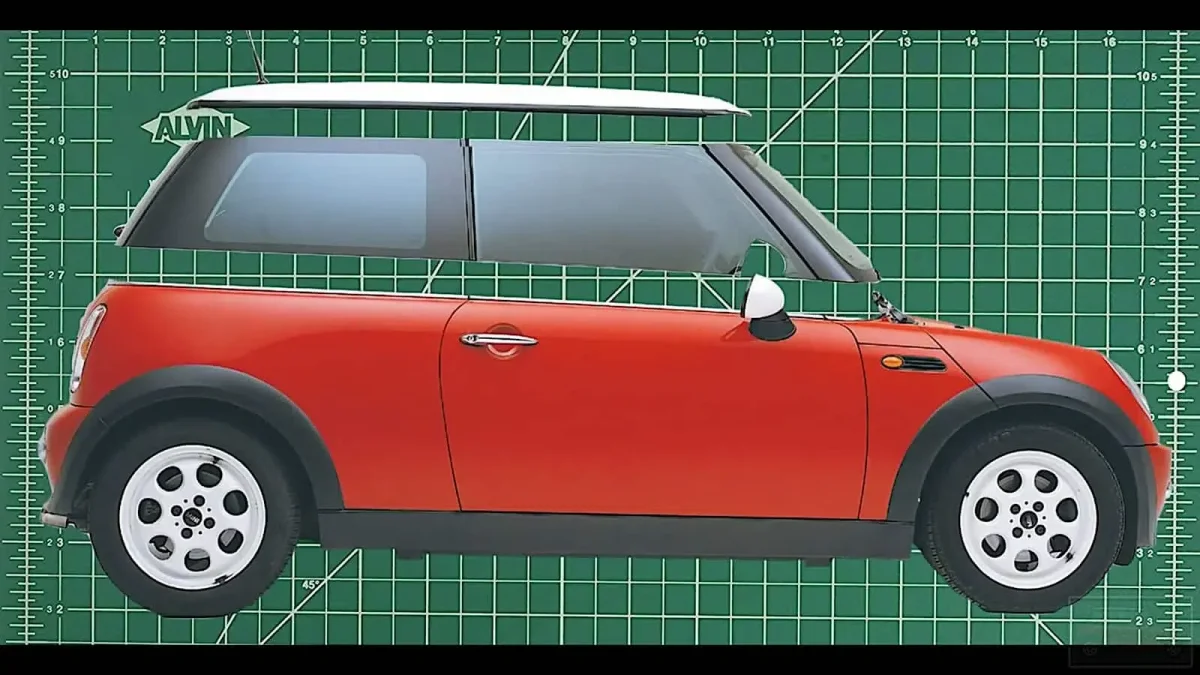
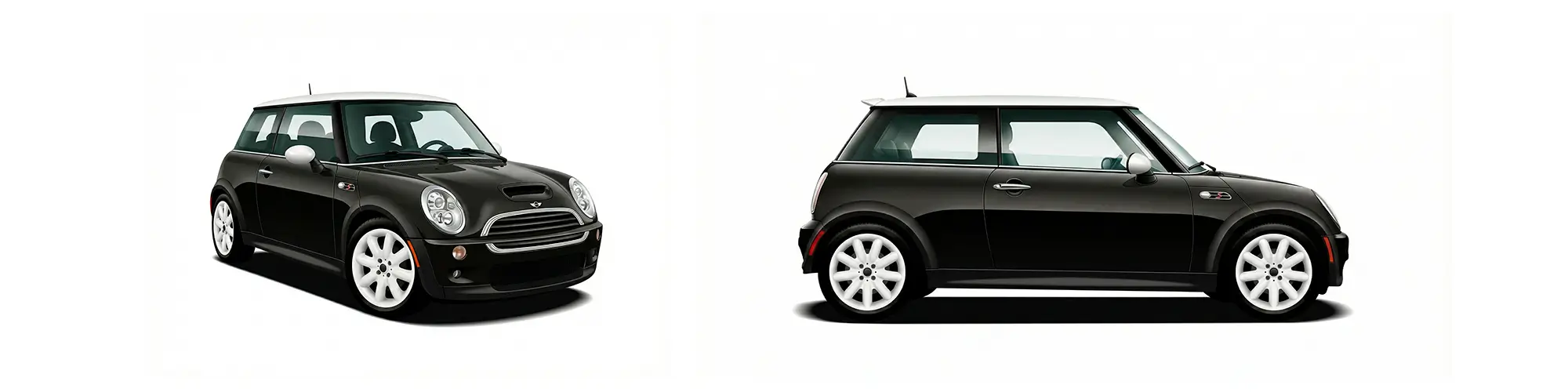
Stephenson conceived the side silhouette as a "three-tier cake": roof, glass and body — three clearly distinct bands. Over this structure he applied the golden ratio of proportions, the same one nature uses in its most beautiful forms.
The lines converge on a single imaginary vanishing point above the car, giving it intrinsic visual stability. The front and rear overhangs were cut to a minimum: all the mass sits between the wheels, preserving the iconic compactness of the original Mini.
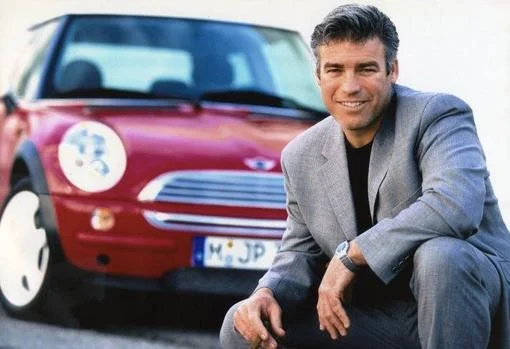
"Today design is the most important selling point. We take for granted that any product will work well — the buying decision comes down to aesthetics."Frank Stephenson · Designer of the modern Mini
The clamshell bonnet
The original Mini had a "weld seam" where two bonnet panels met. Stephenson chose not to hide it — he turned it into a leading line. The new bonnet is an expansive piece that covers not only the top but also the front wings: the so-called clamshell bonnet.
On top he added a central "power dome" — the bulge over the engine — and muscular shapes above the headlamps. Achieving it required complex pressing processes to obtain the flowing surfaces you see today.
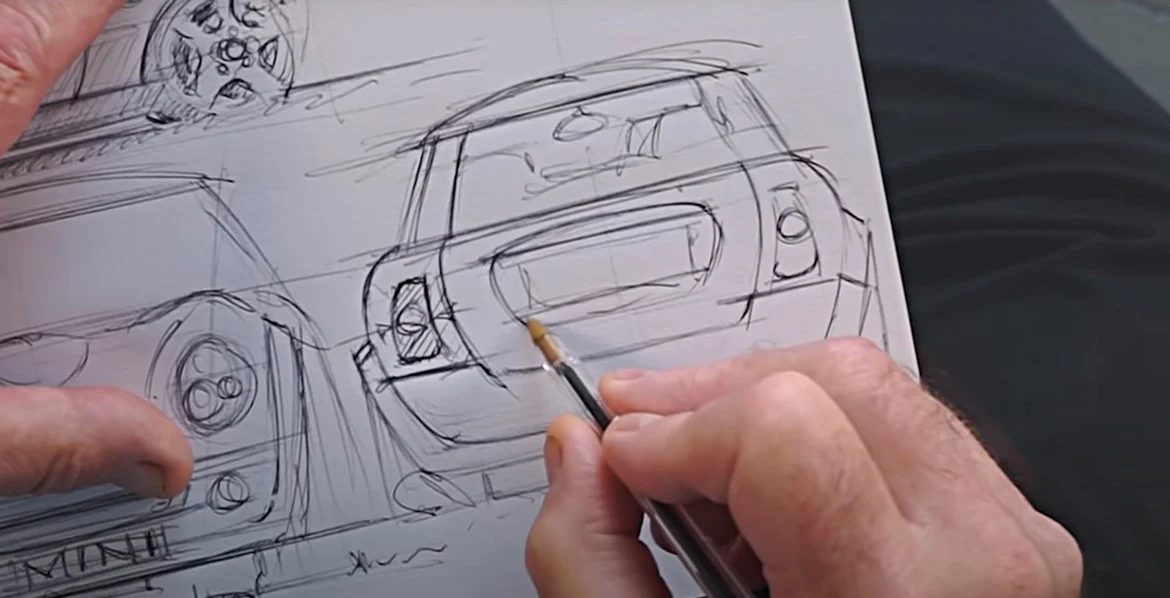
The rear islands
Stephenson insisted on placing the rear lights within the wing, not on the boot lid as the standard dictated. Isolated — like islands. In 1999 it was a manufacturing nightmare, but the result was worth the fight: they visually widen the rear and reinforce the low, wide, athletic stance.
The same effect was sought with the car's "shoulders", which flare noticeably below the line of the rear windows. The R53 looks wider than it really is — and that's pure design.
02 — The car
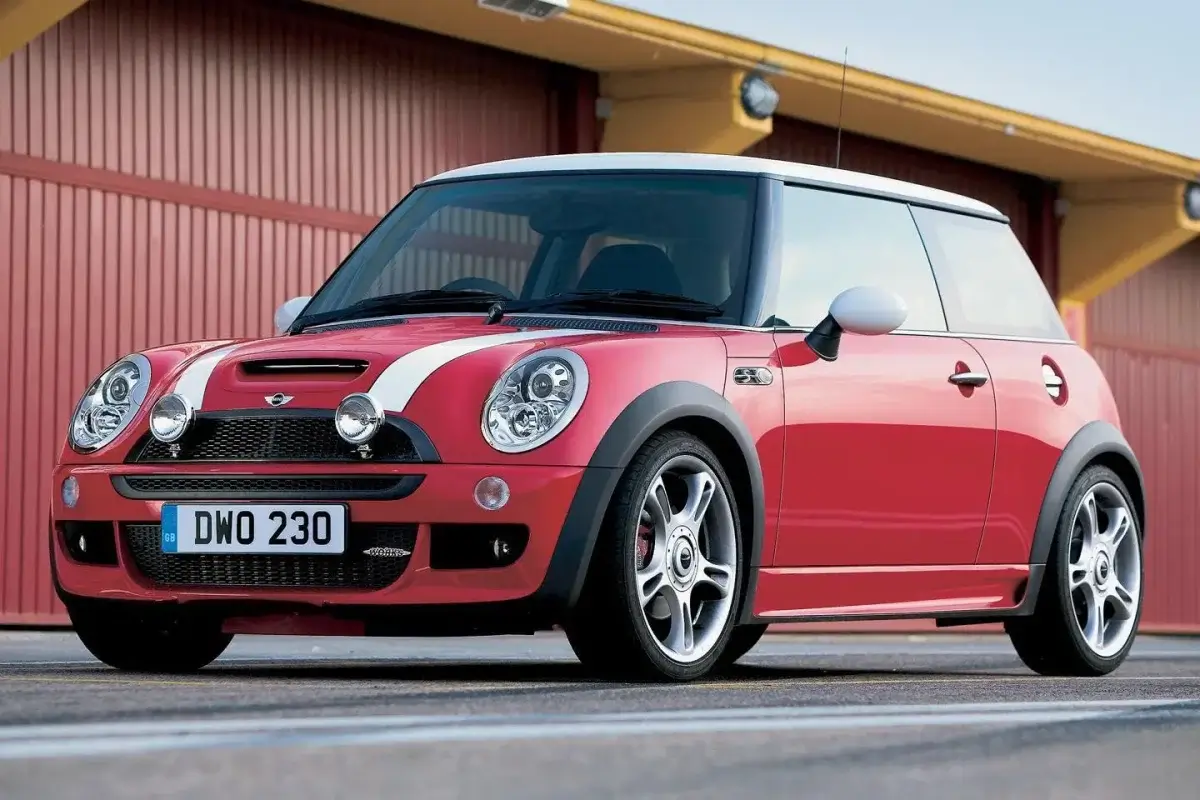
Mini Cooper S R53
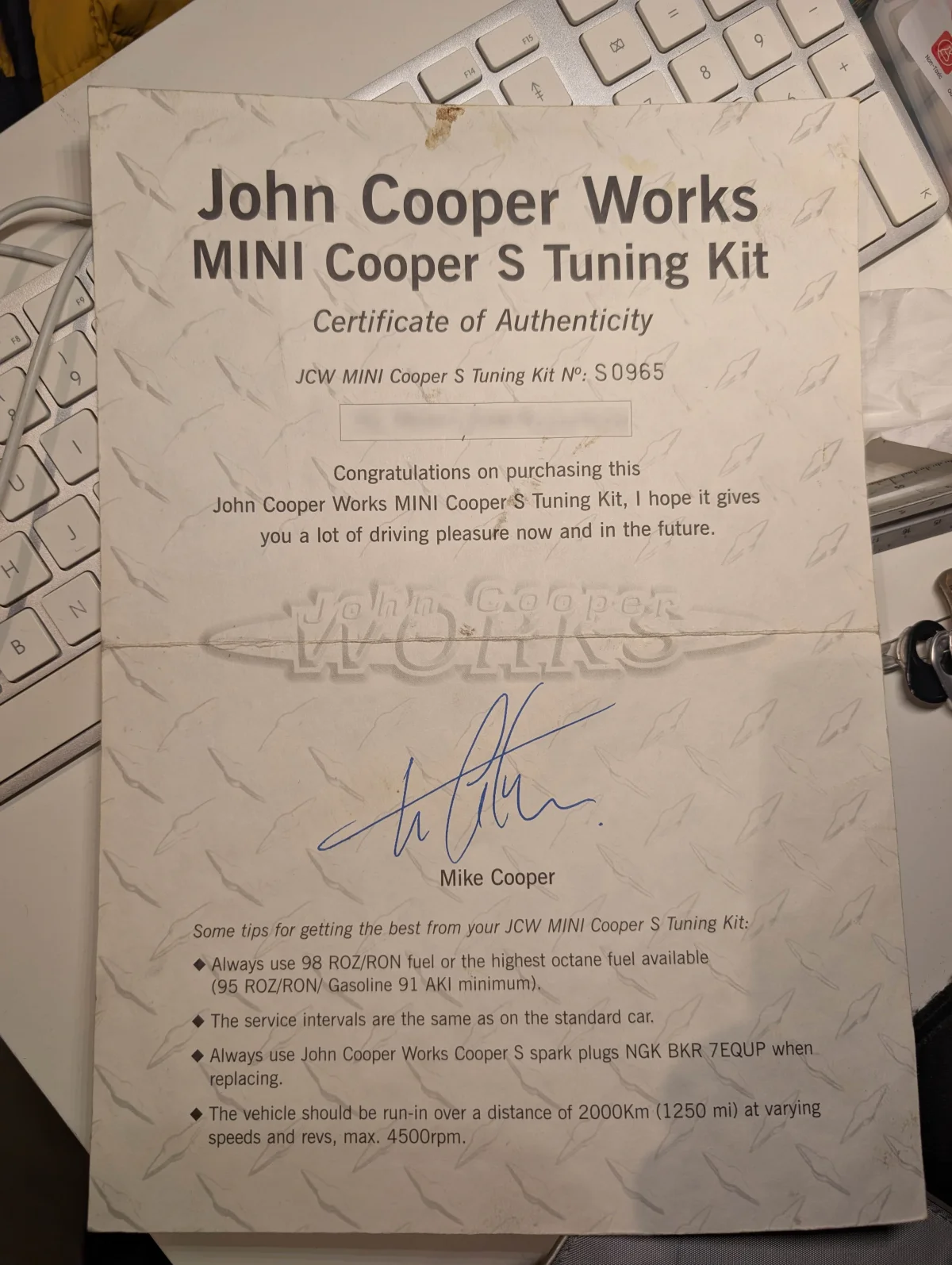
Built between 2001 and 2006 at the Oxford plant, the R53 was the first Mini of the BMW era. The Cooper S version carried something that won't come back: a 1.6 engine with an Eaton supercharger. The John Cooper Works tune pushed it to the limit — and it's estimated that fewer than 20,000 Cooper S kits were fitted worldwide, across all its variants (200, 211 and GP).
Engine developed with Chrysler. Iron block, aluminium cylinder head. Pure mechanical character.
163 hp on the pre-facelift R53, 170 hp from the July 2004 update. Both with the Eaton M45 supercharger and a factory intercooler — the base the JCW kit was built on.
200 hp on the pre-facelift JCW, 211 hp from the July 2004 update. Dedicated ECU, exhaust, supercharger pulley and intercooler.
The sound. The unmistakable whine of the Roots-type blower at high revs. Replaced by a turbo in the R56 — and it never came back.
The last analogue one.
No turbo lag. No intrusive aids. No touchscreen. The R53 JCW is the last generation of Mini in which the car answers directly to your right foot. A six-speed Getrag gearbox, steering with real weight, a chassis that talks to you.
BMW discontinued it in 2006 to replace it with the R56, which adopted the Peugeot-BMW turbo engine. The change was technical — and philosophical.
03 — Potential
Why it's appreciating.
The R53 is going through the transition from "used car" to "modern classic". It's not a hunch: Hagerty has included it in its 2025 Bull Market List. And the patterns repeat across every hot hatch that has climbed in price over the last 20 years.
Fig. 02 — Average auction price
From $8,500 to $17,200 in six years.
+102% · 2018 → 2024Source: Bring a Trailer (BaT) auctions
Of the 34,000 original units registered in the United Kingdom, only around 18,000 remain on the road. And the figure keeps falling through accidents and scrappage.
Industry analysts expect well-kept examples fitted with the JCW kit could double or triple in value over the next decade.
Six reasons behind the phenomenon.
Beyond the macro data, there are concrete specifics that hold up the R53's value — and that send the value of cars with the right options soaring.
Irreplaceable technology
It's the last Mini with a supercharger. The R56 successor dropped the Eaton for the "Prince" turbo engine developed with PSA — a powerplant with a worse reliability reputation. What's no longer made and had no worthy successor goes up.
Documented scarcity
The United Kingdom has lost almost half its original fleet in two decades. The market has noticed: 576 cars have sold on BaT with a 90% sell-through rate and a price range from £600 to £115,000 — proof that the market already tells scrap from gem.
The rare combo: JCW + Chili + LSD
The JCW kit was fitted to order at the dealership. The Chili Pack was optional. And the mechanical limited-slip differential, a rarer option still. Cars combining all three are a tiny fraction of the total fleet — and they're exactly the ones the collector market rewards most.
A genuinely analogue experience
Supercharger, six-speed Getrag manual, front MacPherson and rear multi-link suspension, responsive steering and a stiff chassis. No intrusive aids, no screens. A combination no modern car can replicate any more.
A shift in the buyer
A decade ago it was bought by people who wanted an affordable, fashionable car. Today it's bought by enthusiasts and collectors who restore or preserve it for Sunday driving. When the buyer changes, the price changes.
Modern-classic age
It's entering the 20–25-year bracket, exactly the range where the values of iconic hot hatches historically take off: Golf GTI Mk1, 205 GTI, Clio Williams. We know the curve — and the R53 is starting to climb it.
04 — My car
A genuine unicorn.
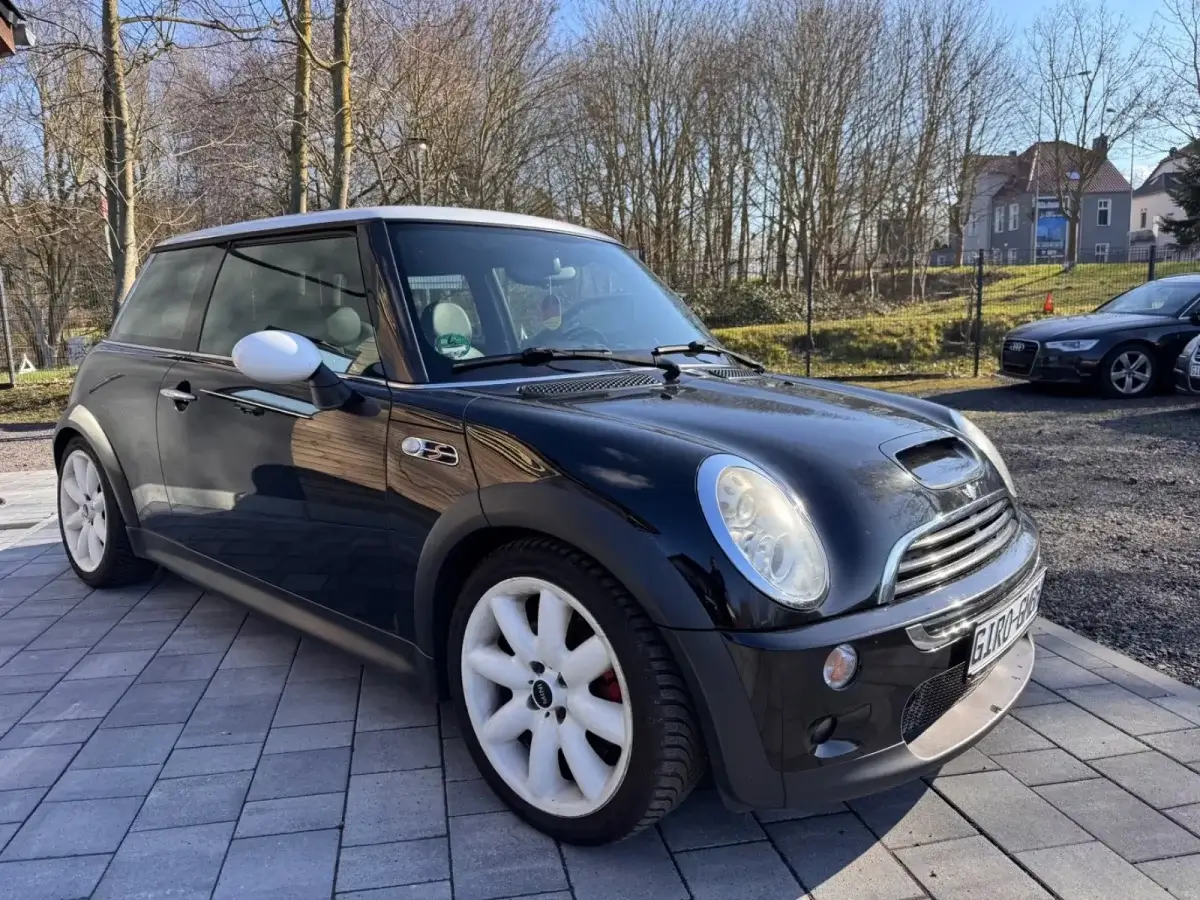
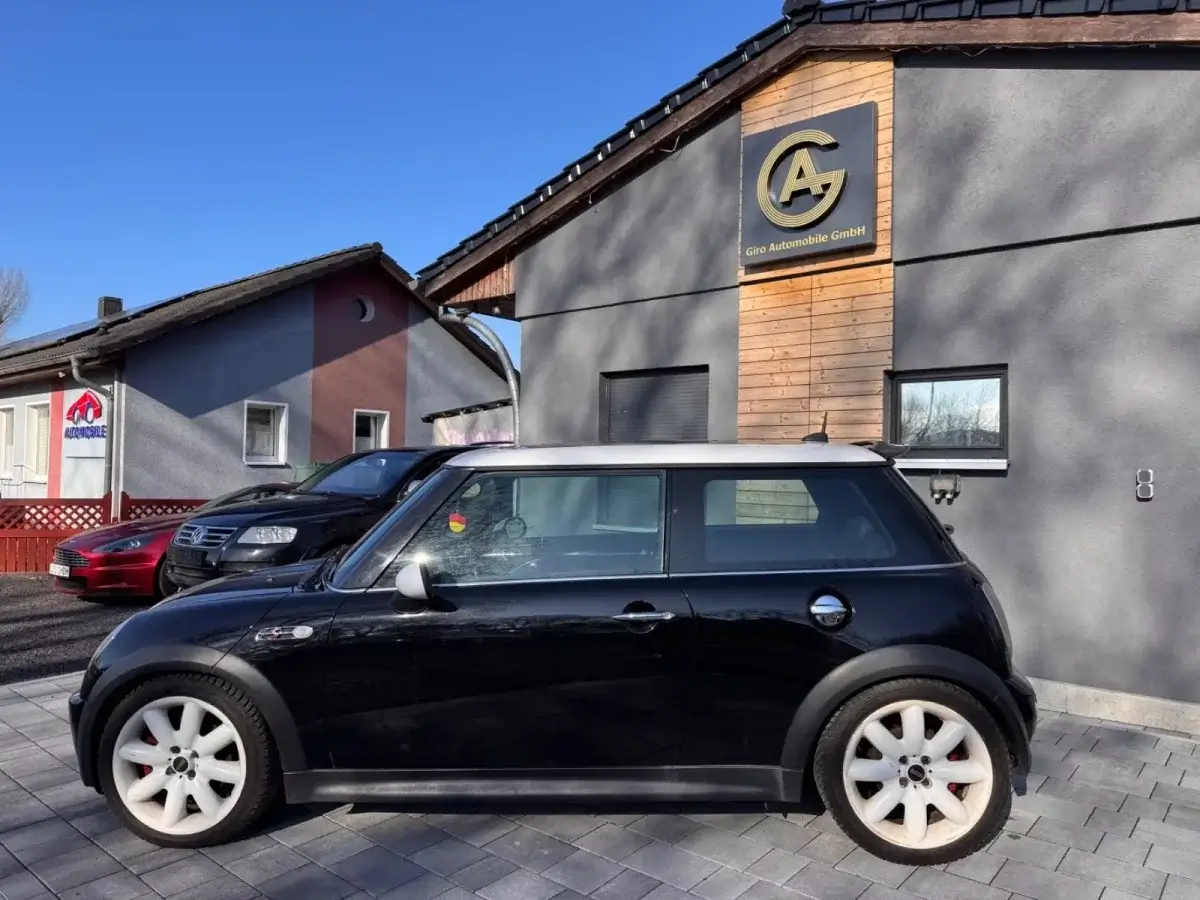
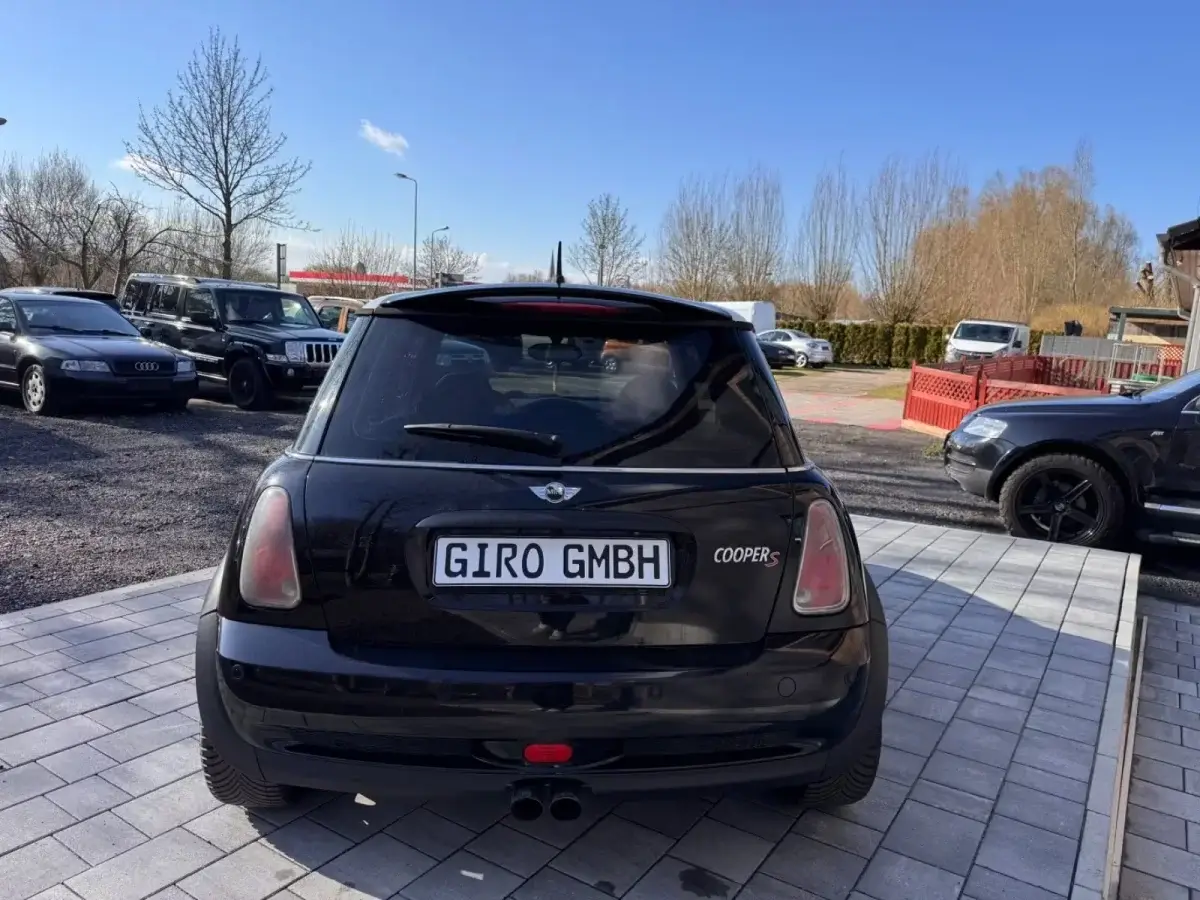
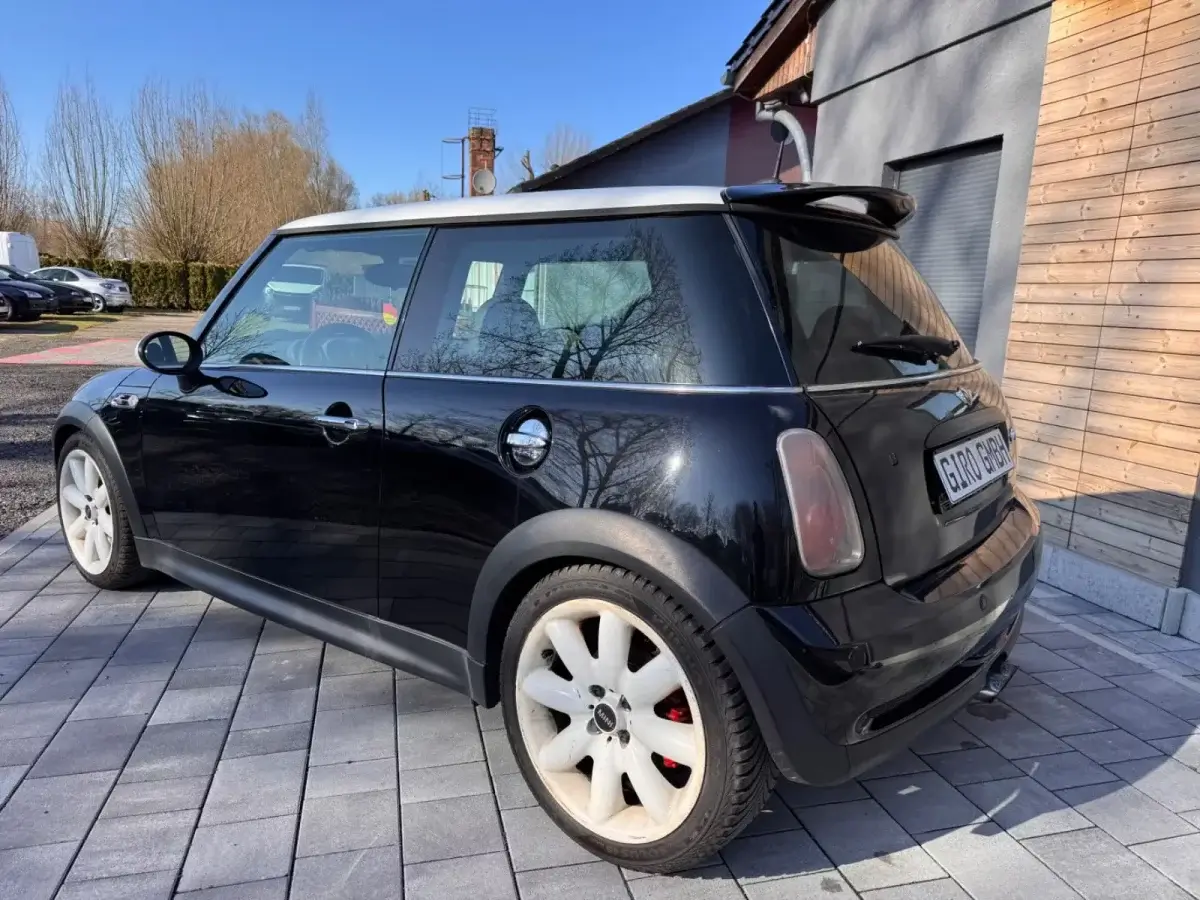
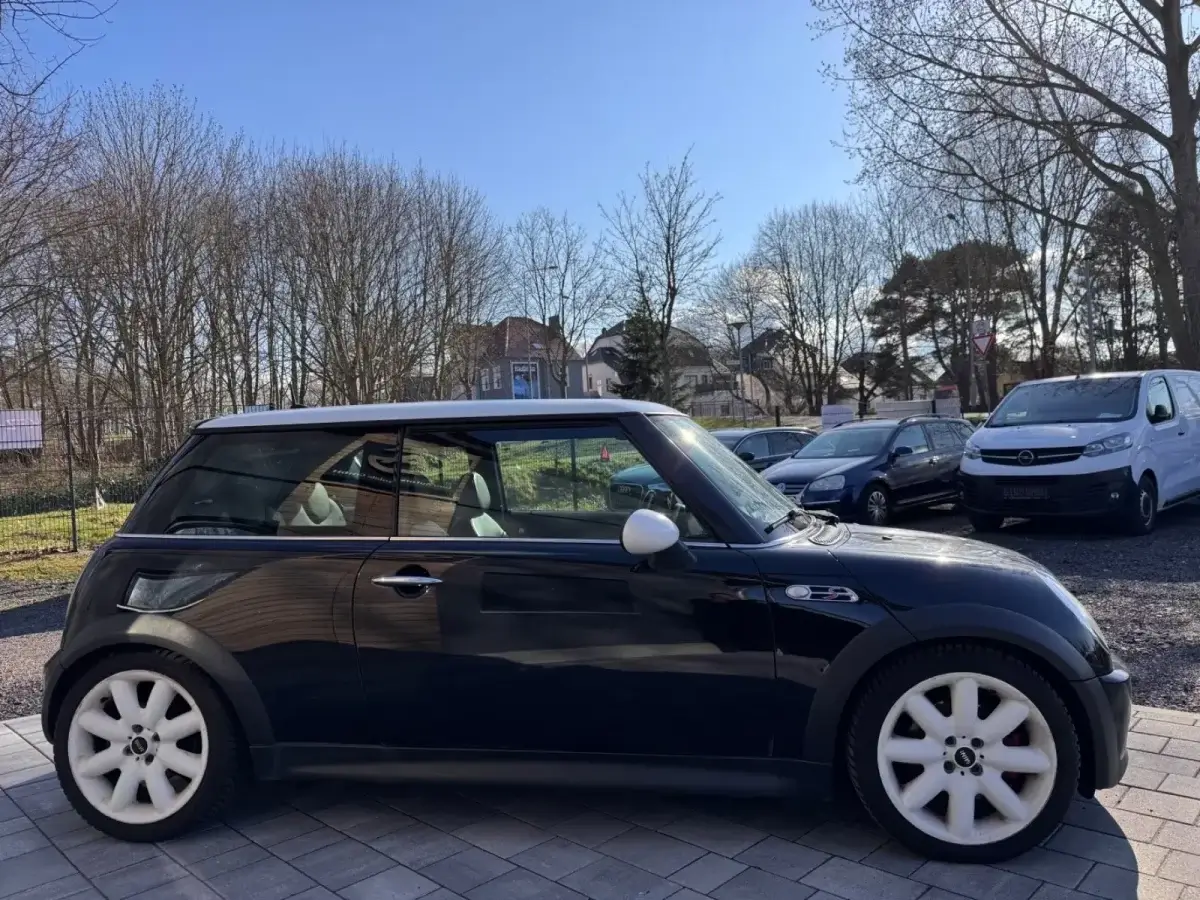
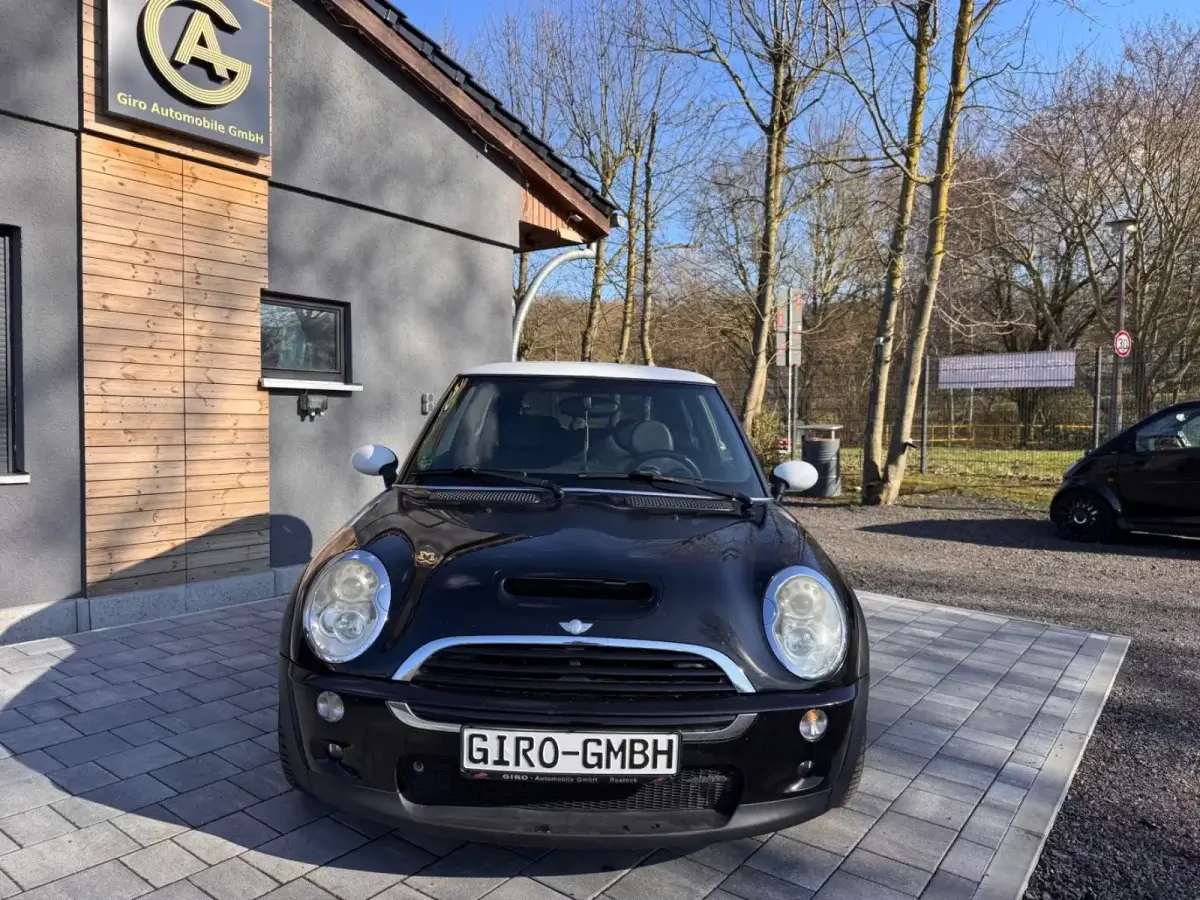
January 2026. A listing that said "engine broken" at a used-car dealer in northern Germany. Behind it, a 2005 car with the full JCW package fitted at the dealership. I brought it home on a trailer.
JCW 211 hp
Full JCW package
Fitted at an official dealership. Verified visually component by component, cross-checked against the international The JCW Register.
Full JCW package
Fitted at an official dealership. Verified visually component by component, cross-checked against the international The JCW Register.
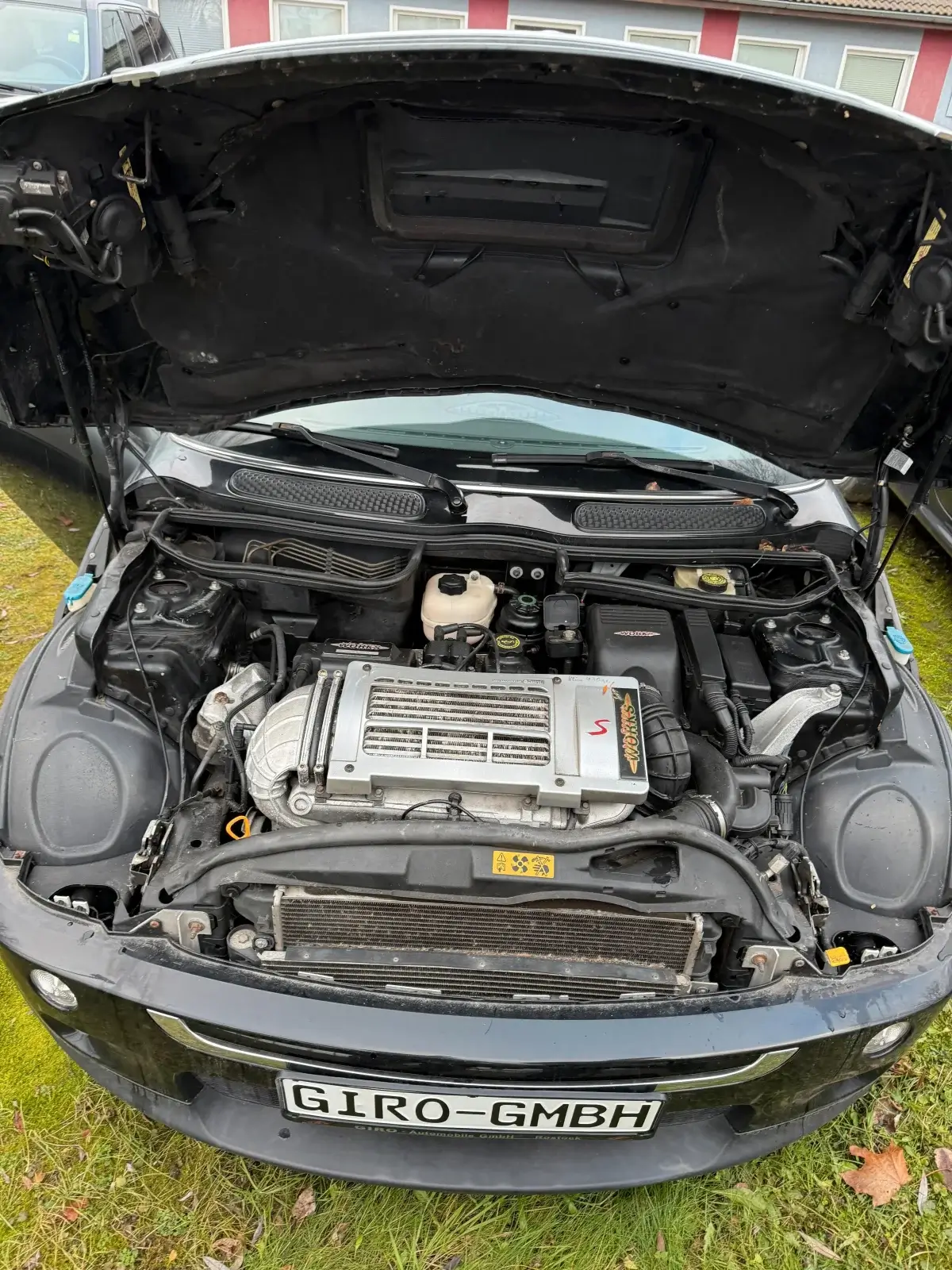
- JCW cylinder head Head with enlarged exhaust ports compared with the standard Cooper S. Identifiable by the "RA" casting mark.
- Eaton M45 supercharger with reduction pulley 58.2 mm JCW pulley versus the standard 65 mm — 11% faster for more boost. Supercharger with a Teflon coating.
- Blue 380cc injectors Replace the Cooper S's standard 330cc injectors. Paired with colder heat-range spark plugs.
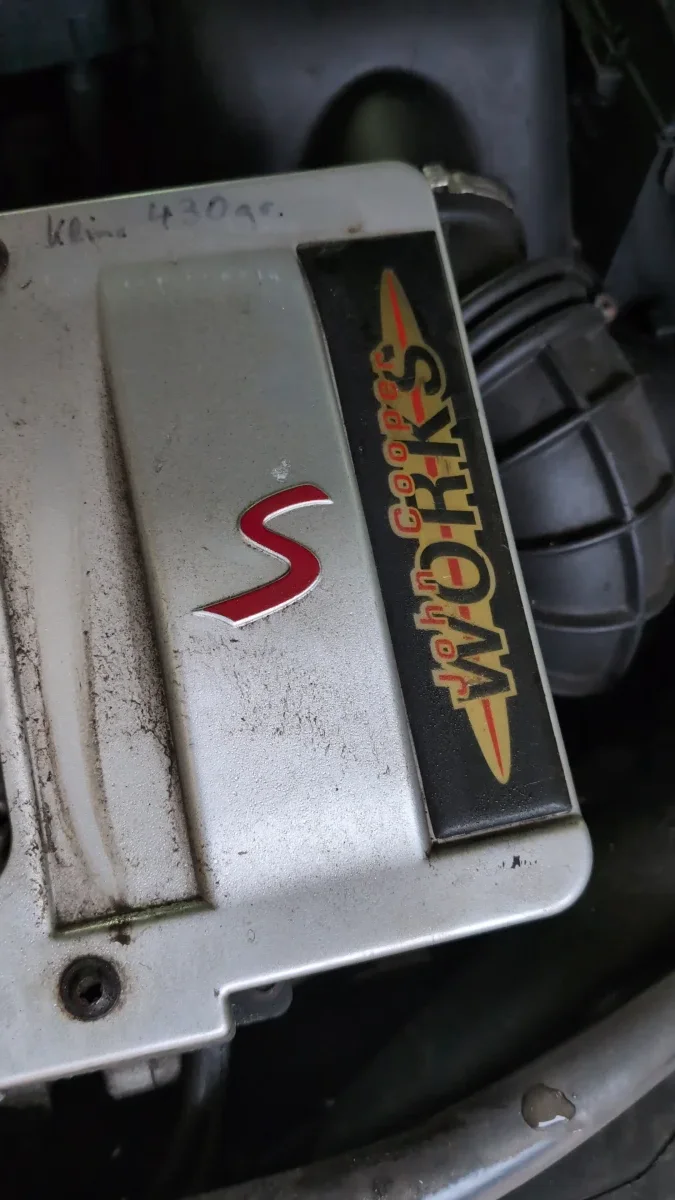
- Intake box with JCW logo A specific pod-type filter (not a panel) and an additional "flap" valve to optimise airflow.
- JCW intercooler cover Silver with an engraved logo.
- JCW cat-back exhaust Twin central outlet with tips engraved with the JCW logo.
- Remapped, certified ECU ECU with an official JCW label — the visible proof the kit is genuine and not a later modification.
- JCW sports brakes Larger-diameter discs and front calipers painted red.
Technical details cross-checked with The JCW Register — the international census of R53 cars with the official John Cooper Works package.
Chili Pack
Chili and limited-slip differential
The most complete sports package of the R53 era. And the icing: the coveted mechanical limited-slip differential, an uncommon option that collectors prize highly.
Chili and limited-slip differential
The most complete sports package of the R53 era. And the icing: the coveted mechanical limited-slip differential, an uncommon option that collectors prize highly.
- Mechanical limited-slip differential The most sought-after part on the Cooper S. It multiplies traction on corner exit and sends the values of factory-fitted cars soaring.
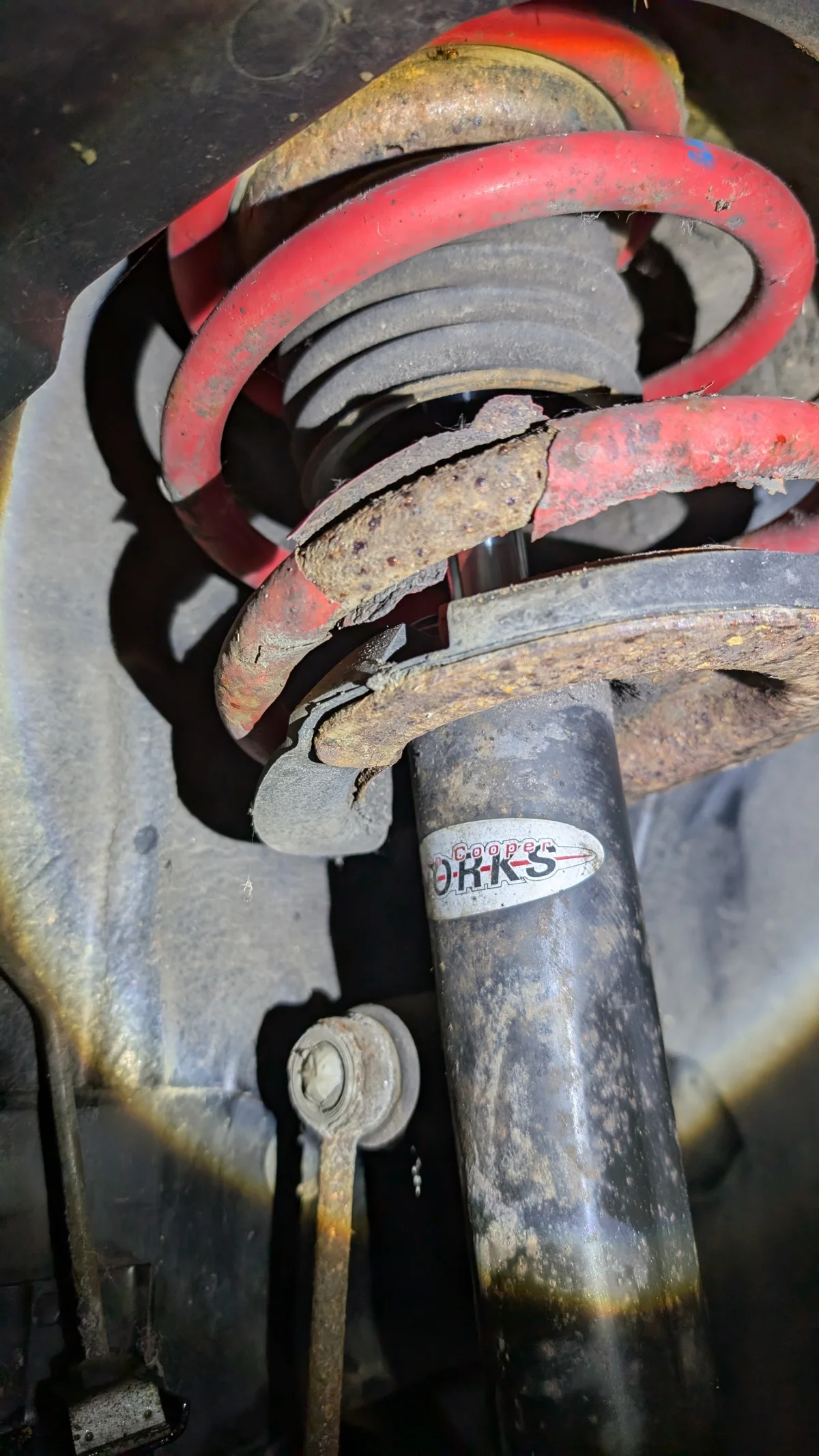
- Sport Suspension Plus Firmer tuning and thicker anti-roll bars than the standard sports suspension.
- DSC III — Dynamic Stability Control BMW's third-generation stability control, with a sports calibration.
- Multifunction sports steering wheel Integrated cruise control and radio controls.
- Xenon headlights with washers High-end lighting — a premium option in its day.
- Fog lights Integrated into the front bumper.
- Interior lighting package Additional ambient lights in the cabin.
- On-board computer Trip, fuel-consumption and range information.
Premium
Comfort, luxury and technology
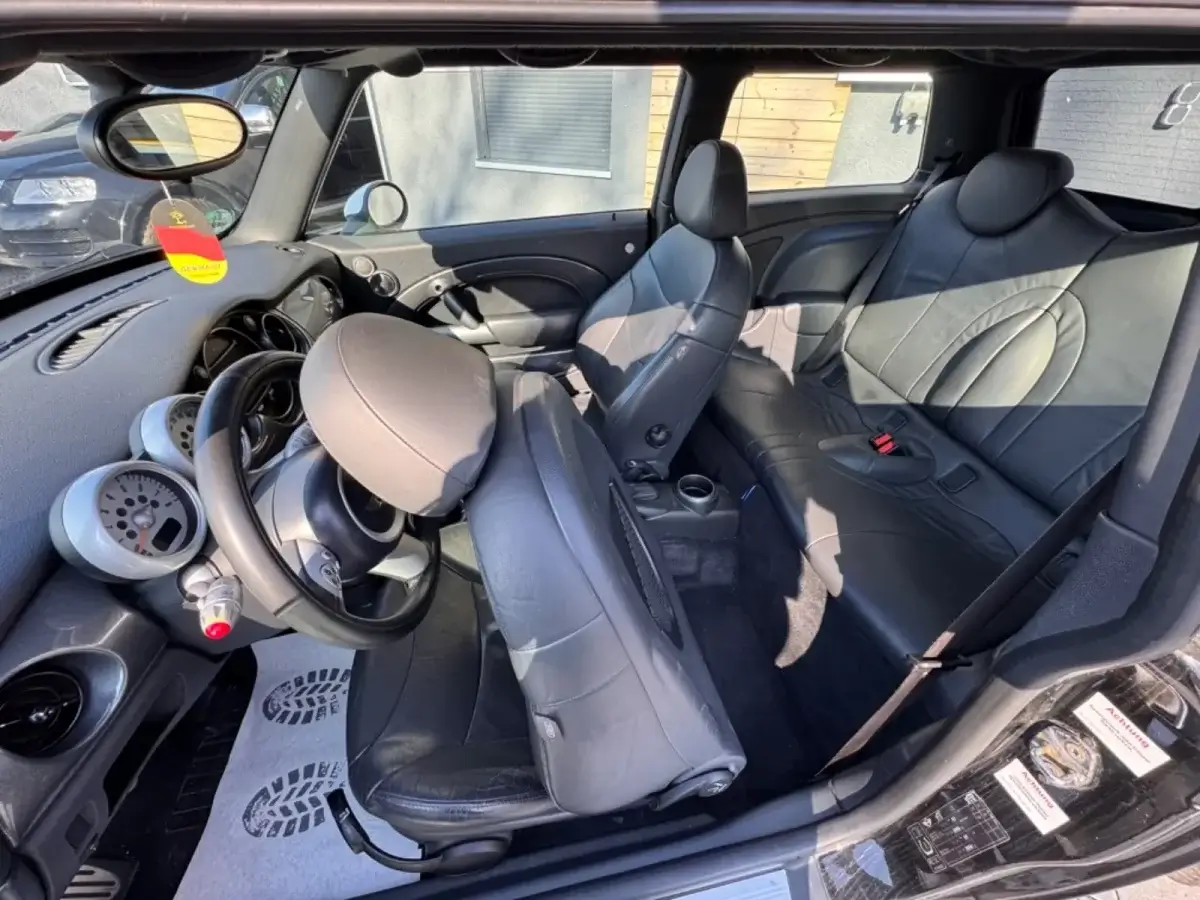
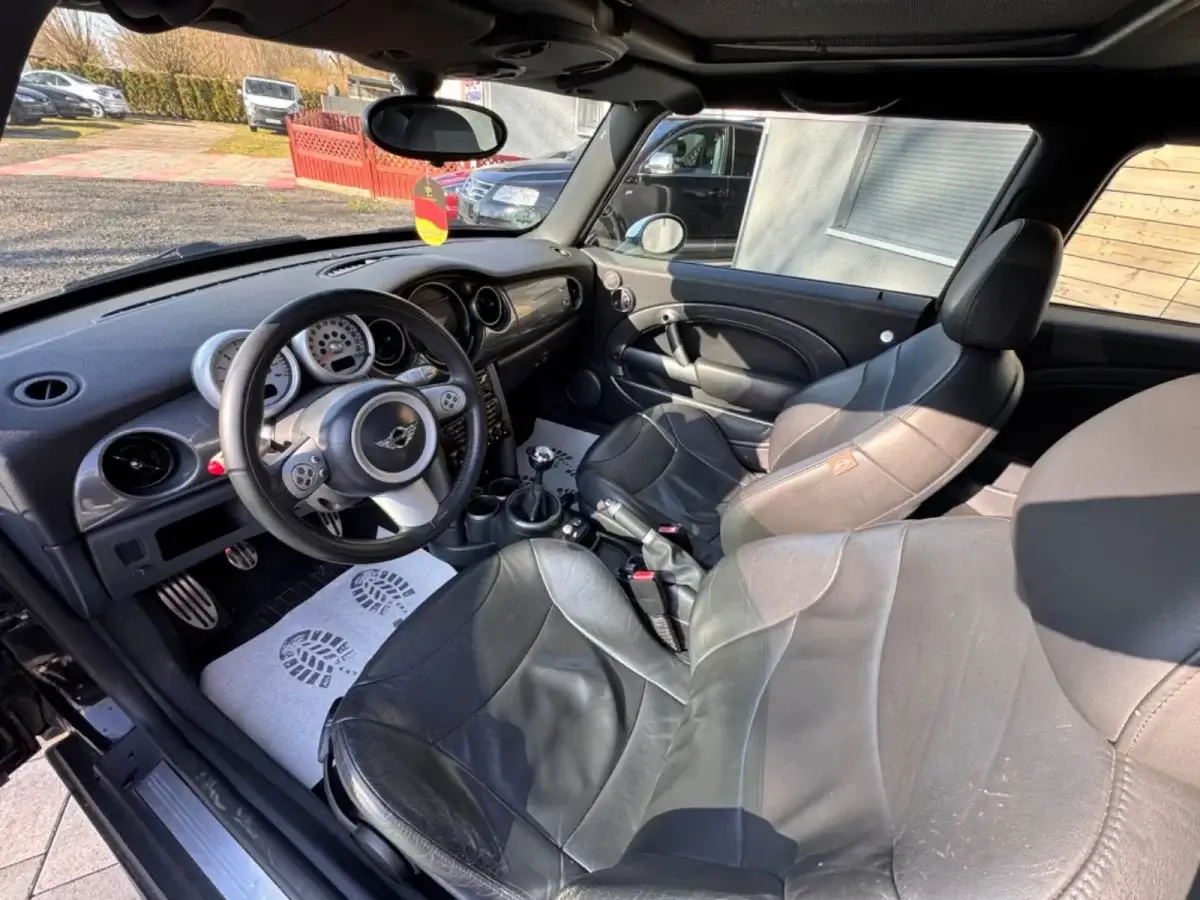
This car was specced to the max. Full high-quality leather, Professional navigation with twin dials and a panoramic roof — options rarely seen on a Cooper S of the period.
Comfort, luxury and technology
This car was specced to the max. Full high-quality leather, Professional navigation with twin dials and a panoramic roof — options rarely seen on a Cooper S of the period.
- Full Gravity "Panther-Black" leather Full leather upholstery — an upgrade over the standard Chili Pack's cloth/leather mix.
- Heated sports seats Improved lateral support and heating in the front seats.
- Professional navigation Centre screen + a second dial behind the steering wheel. Visible in dashboard photos.
- Panoramic glass sunroof Electric opening. An uncommon option on the R53.
- Automatic climate control Independent digital climate control.
- Rear parking sensors (PDC) A rare extra to find on an R53.
- Electrically folding mirrors Electric folding, heated. Heated washer jets too.
- Black II paint — code 668 Original factory colour.
- 6-CD changer + player Premium audio equipment of the period.
- Chrome Line interior and exterior Chrome details that set apart the best-equipped version.
05 — The process
The restoration plan.
Bringing it back to life honestly. No shortcuts. Documenting every phase so the car has a traceable history.
01
The search and purchase
January 2026
✓ Done
I'd spent a while thinking about which project to take on. I researched cars with appreciation potential and settled on the Mini Cooper S R53. I started looking on Wallapop, but nothing convinced me. I drove to Nules to see one: a young lad with a Mini that had been through the wars. No deal.
I decided to look in Germany, to see what the market was like there. A promising car turned up: the listing mentioned lots of options, gearbox fine, but a broken engine — the car won't start. What for many would be a flat "no way", for me was the perfect car. Loaded with options, good looks, post-facelift and with the JCW kit. A German-speaking friend did me the favour of phoning the dealer. The car was available and they'd sell it to me. I made the transfer without a second thought. The car is mine. We've got a project.
02
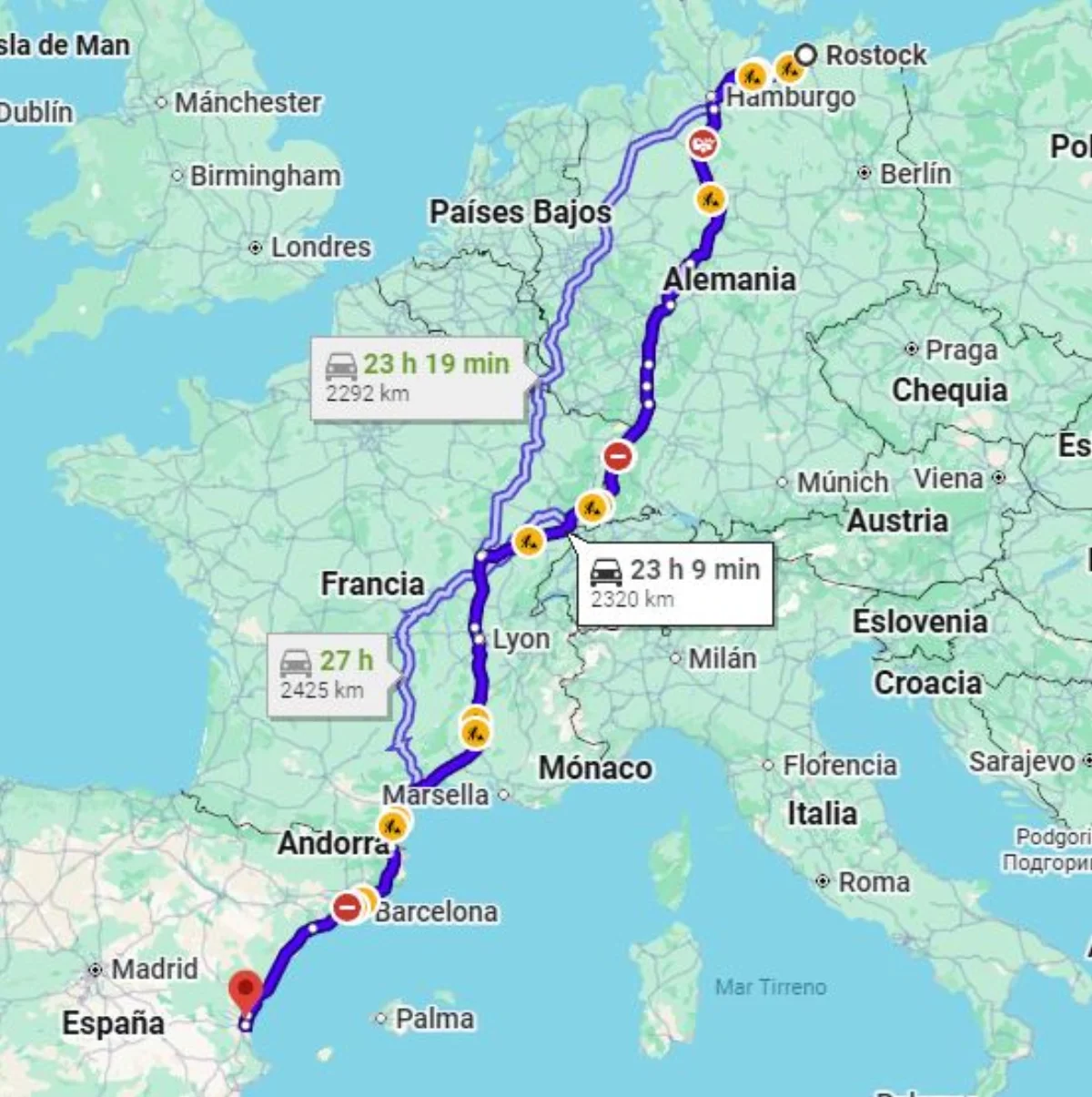
The journey: 2,300 km through a snowstorm
January 2026
✓ Done
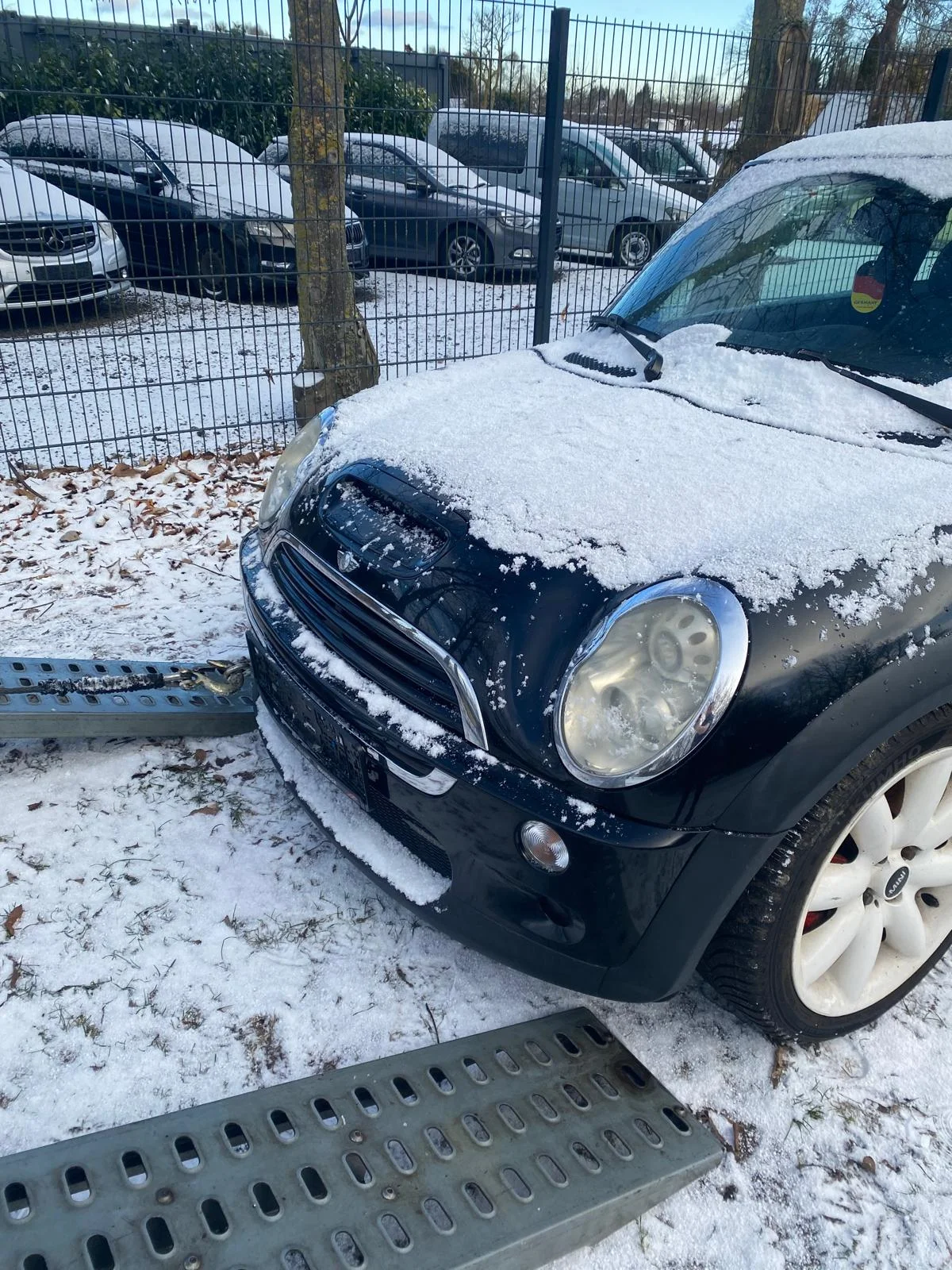
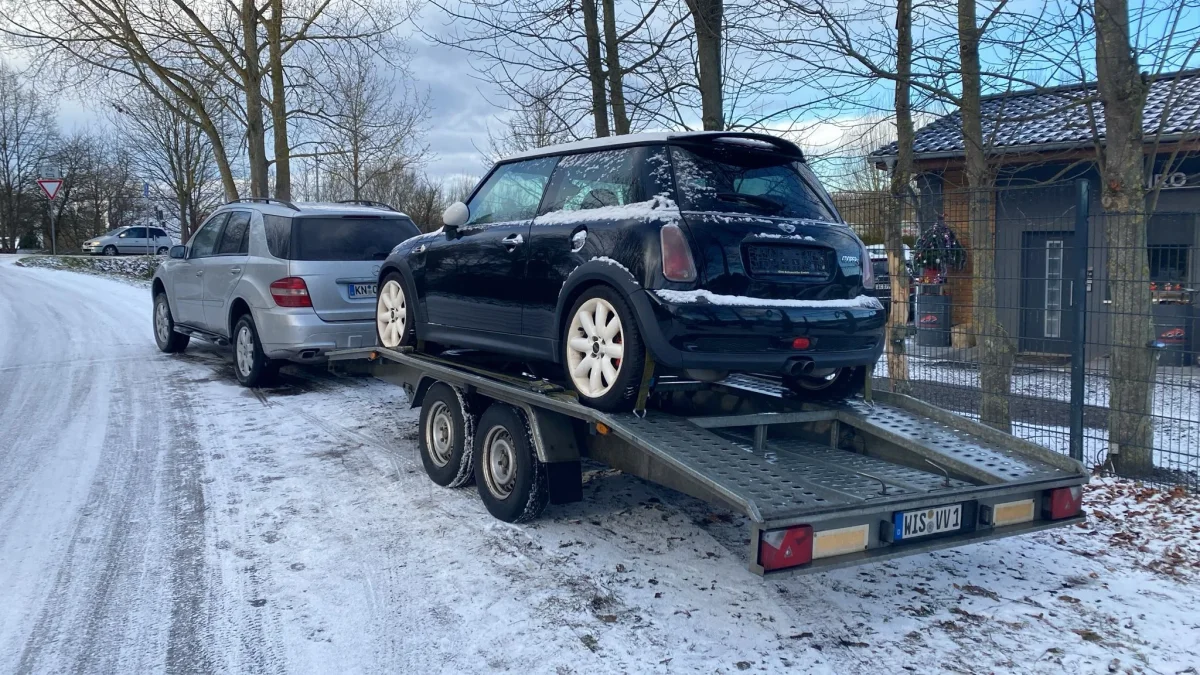
With the purchase closed, the hardest part remained: getting it home. After searching a website that connects private individuals with hauliers, Dominik took on the trip from Rostock to Valencia. We agreed a price and a collection day.
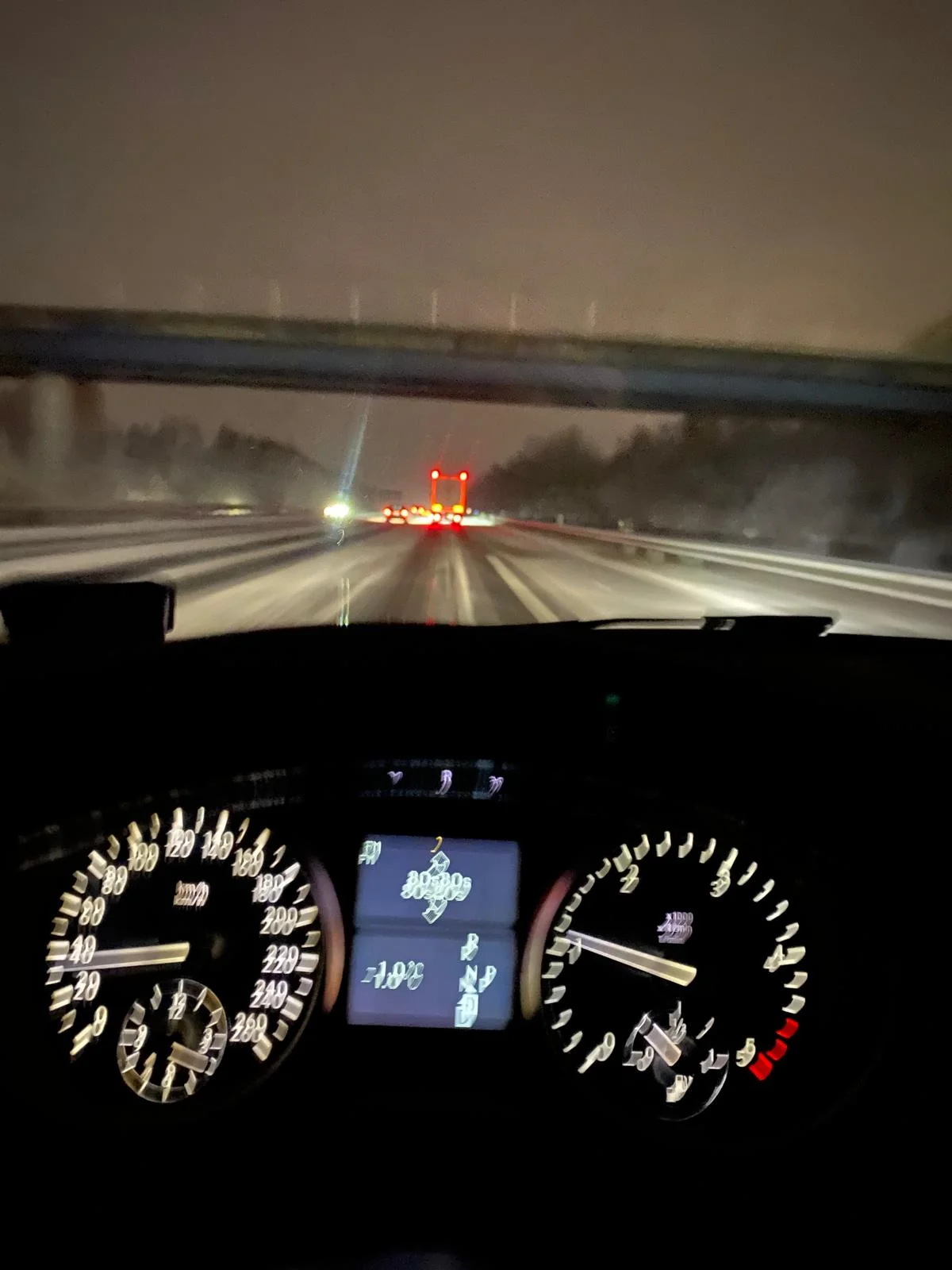
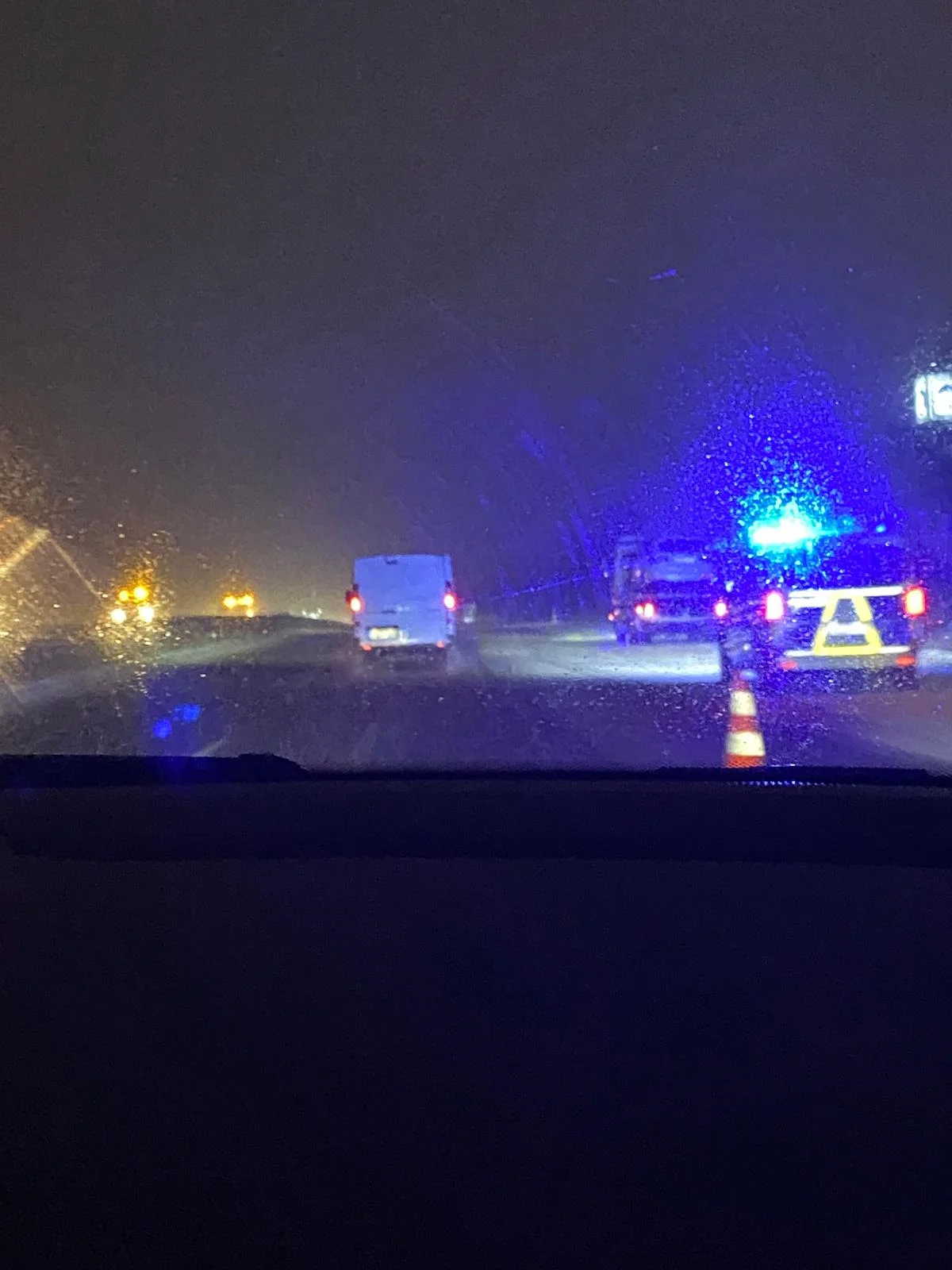
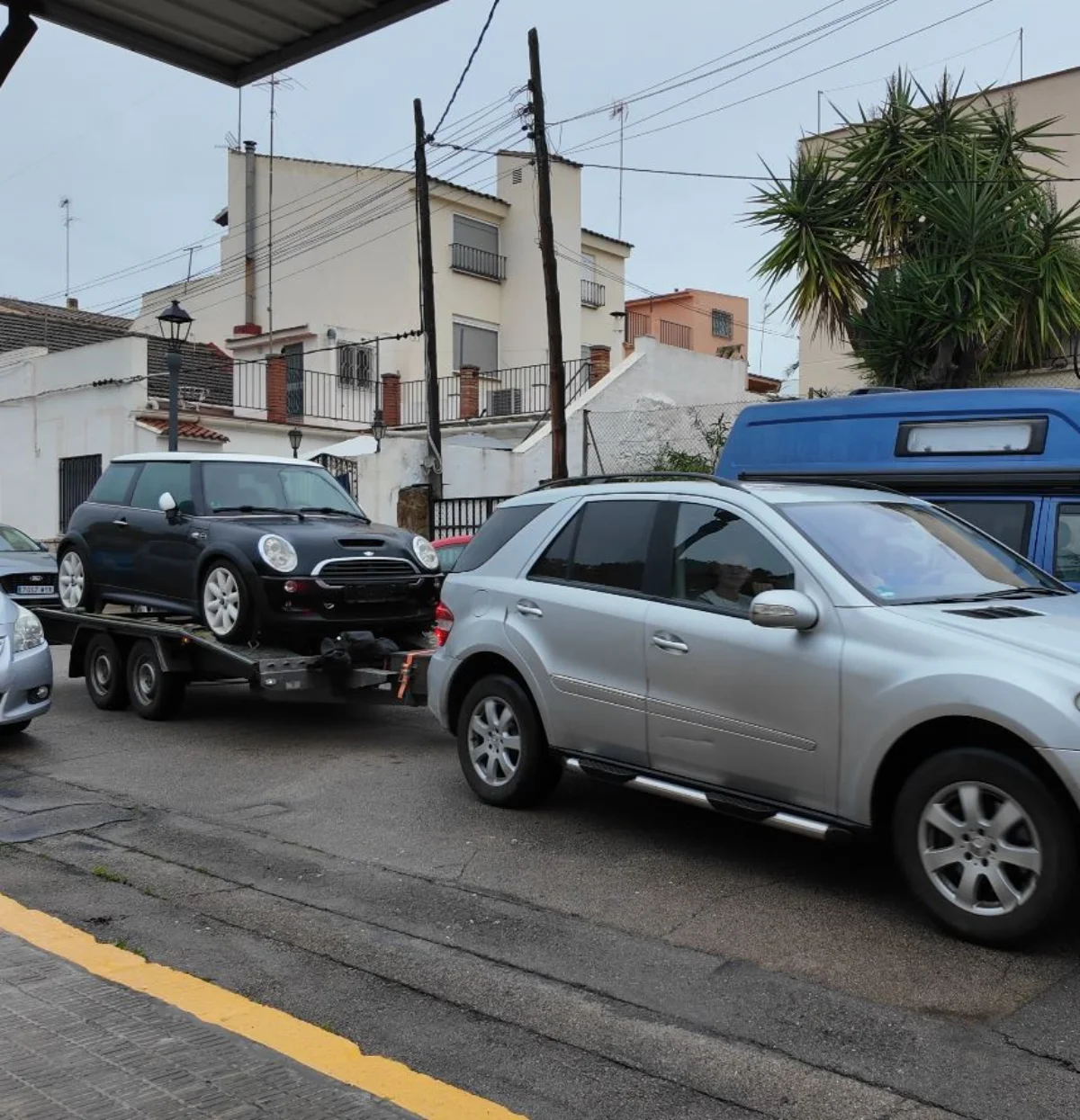
The day before setting off, a snowstorm blanketed northern Germany and closed roads. Conditions weren't ideal, but I talked Dominik into at least trying. He had a hard time on the first stretches: there were parts of the Autobahn where he crawled along at 40 km/h amid snow and road closures. The Mercedes ML and his experience did the rest. The next day he was already rolling through friendlier areas, crossed the whole of France and entered Spain at La Jonquera. On the afternoon of 5 January, after a long wait, a Mercedes ML turned the corner. The Mini was home.
03
Full inspection
January 2026
✓ Done
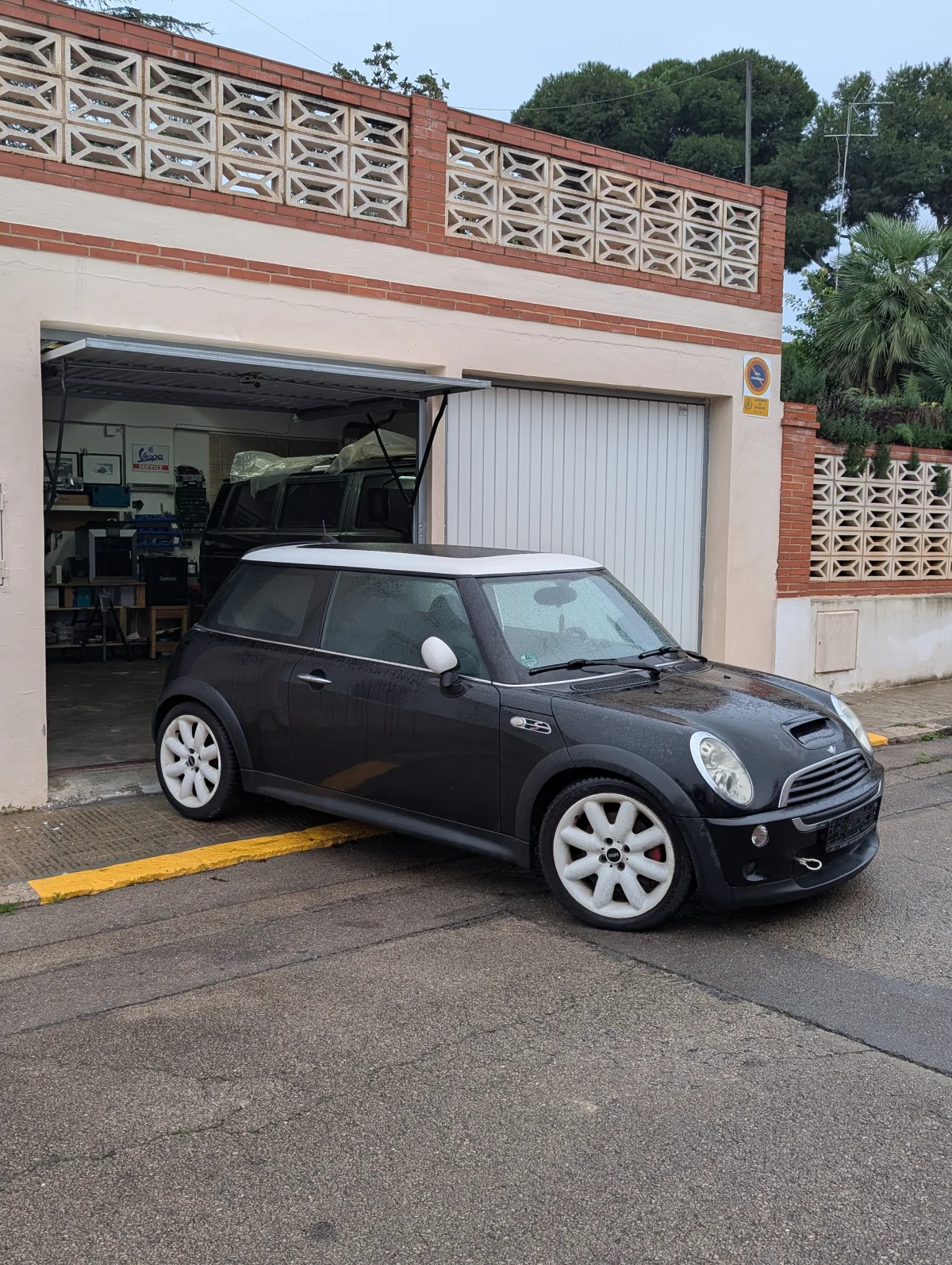
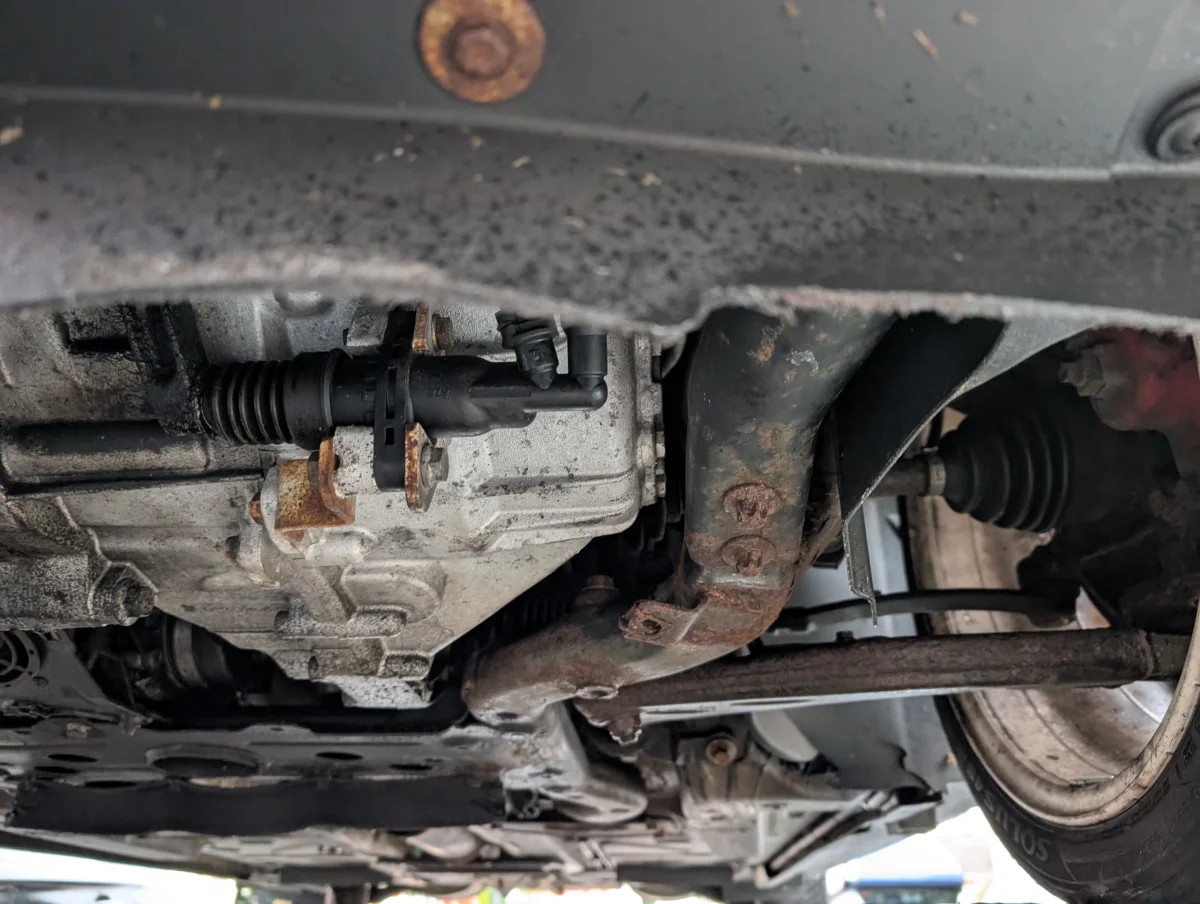
Car in the garage. Time to inspect it: rust, the state of the interior, paperwork, the JCW equipment. And above all, to get a sense of that engine fault the listing mentioned without any detail.
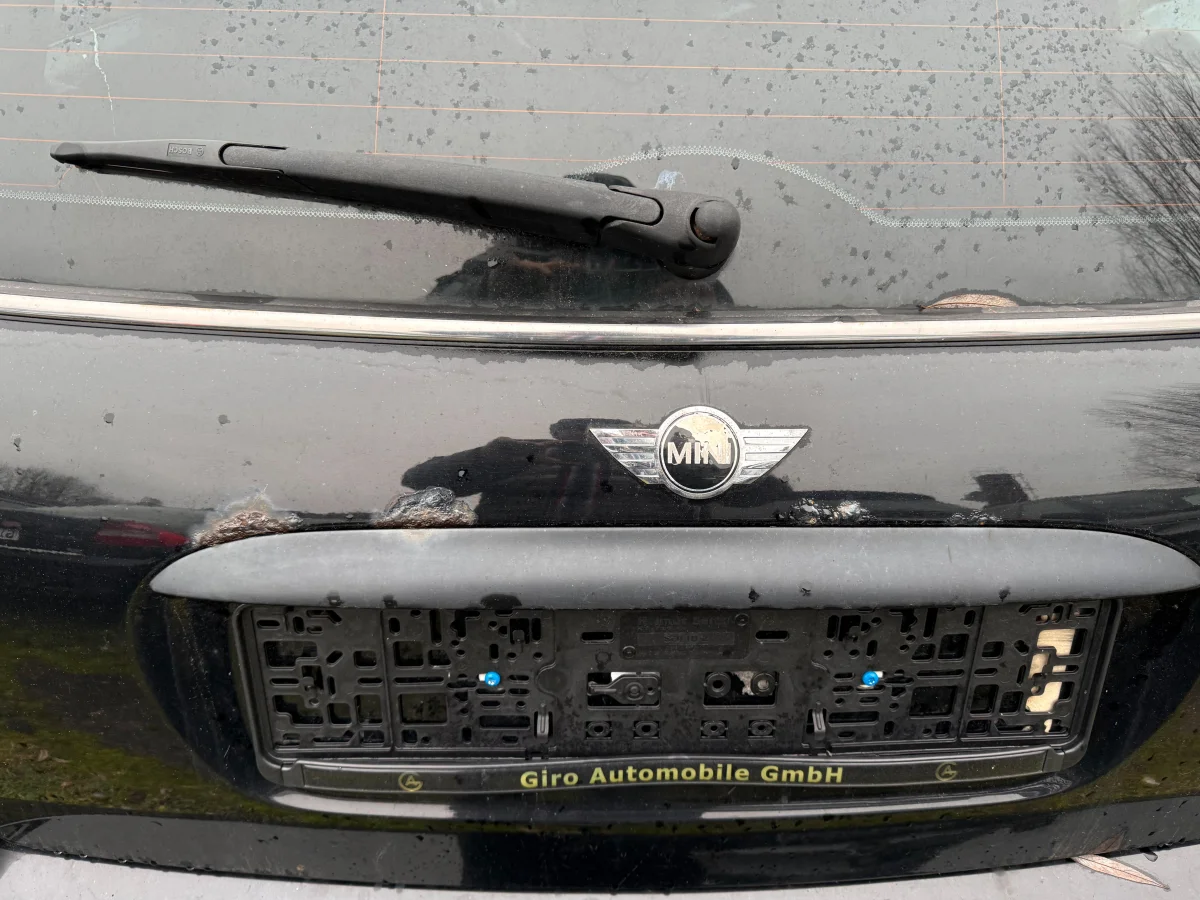
The overall condition was good. It had arrived caked in road salt from the trip on the transporter, but the body looked fairly healthy. These cars have two typical rust spots: under the rear lights and on the tailgate around the handle. The first one, clean. The second one did have some. Underneath, everything better than expected: the battery area sound, a decent subframe, wheel arches and other critical areas rust-free. Surprising, given the car came from the Baltic coast.
04
The poisoned surprise
January 2026
✓ Done
It was time to inspect the car: see what it was like, what it had, what state it was in. That's when I got to the boot, opened the side panel and saw what looked like a small power amplifier. Digital POWER SoundModul developed by Audio Mobile, it said in big letters.
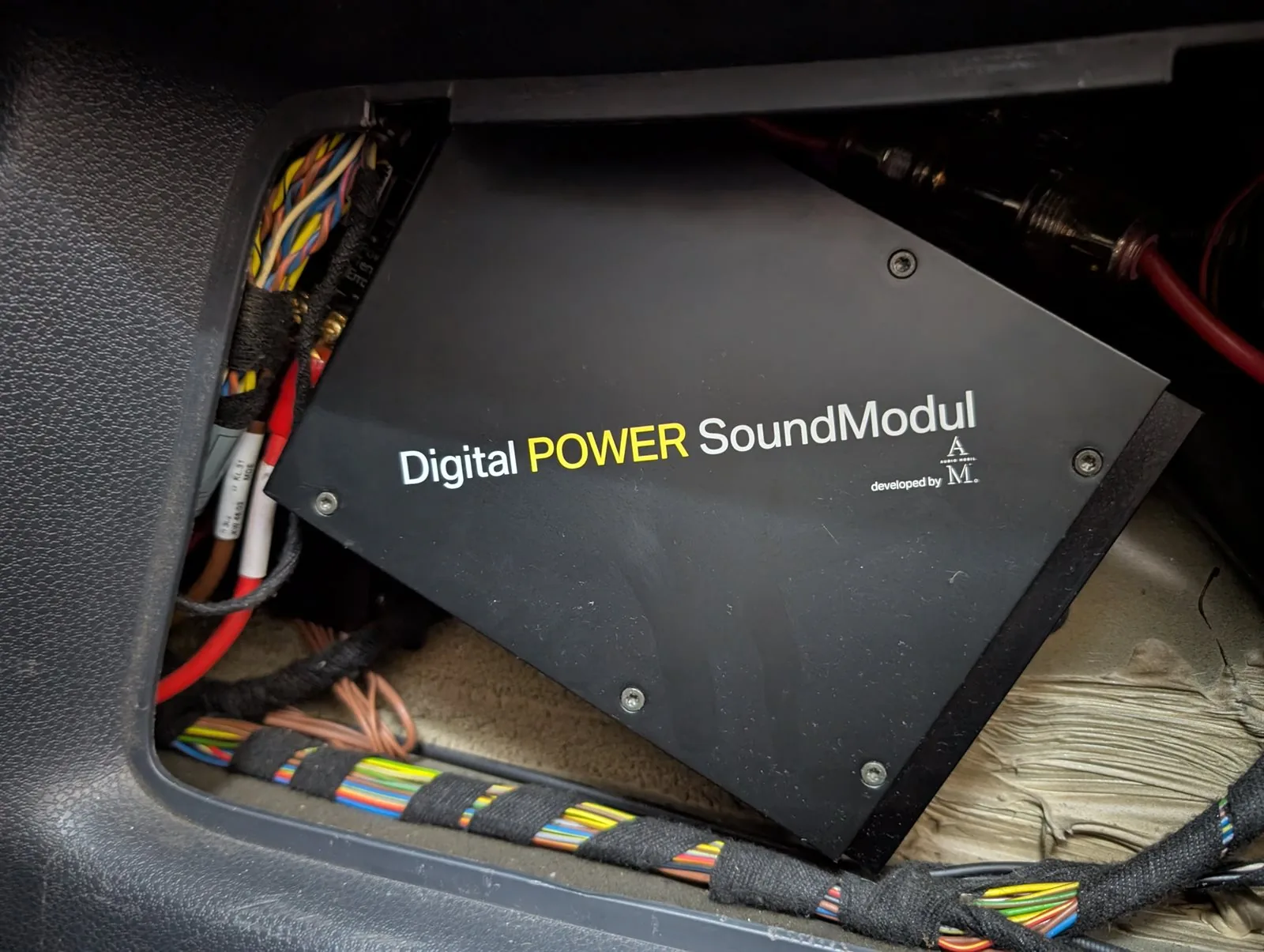
What was that? After a search online, I found out it's a very special sound system: the option almost nobody ticked as part of the equipment.
The reason? €1,500 extra for a 700W digital system thanks to the module you see in the photo.
But as the title says, this pleasant surprise was poisoned. When I went to test the sound system, I realised something was up: a swapped head unit, a blue cable running front to back through the car, and RCA plugs at the end of it. Someone had decided — for one reason or another — to bypass the original system and fit a Pioneer head unit and a subwoofer that was no longer there.
The reason seemed clear: the DPSM didn't work.
To be continued…
05
I have to find out what happened…
January 2026
✓ Done
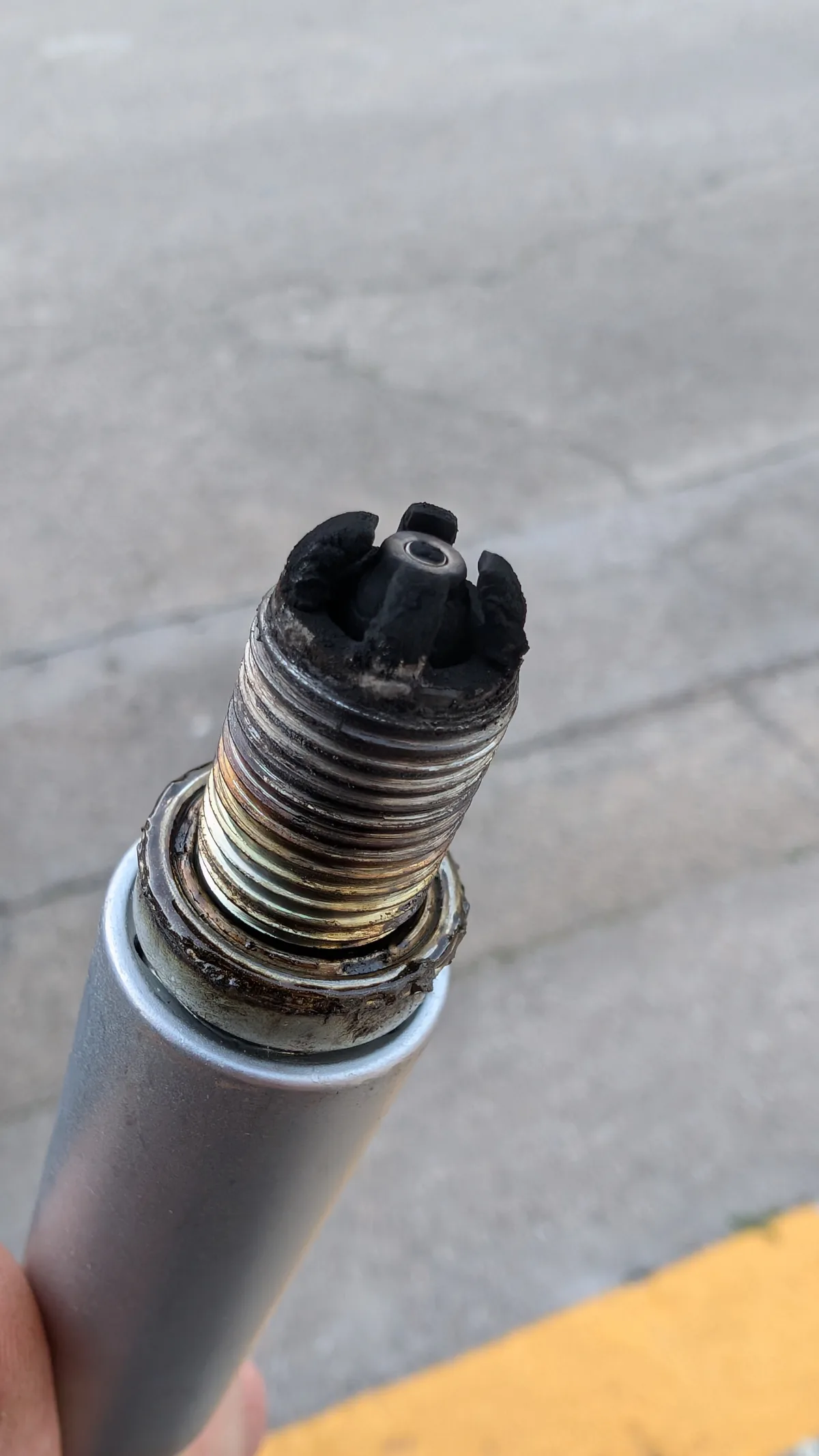
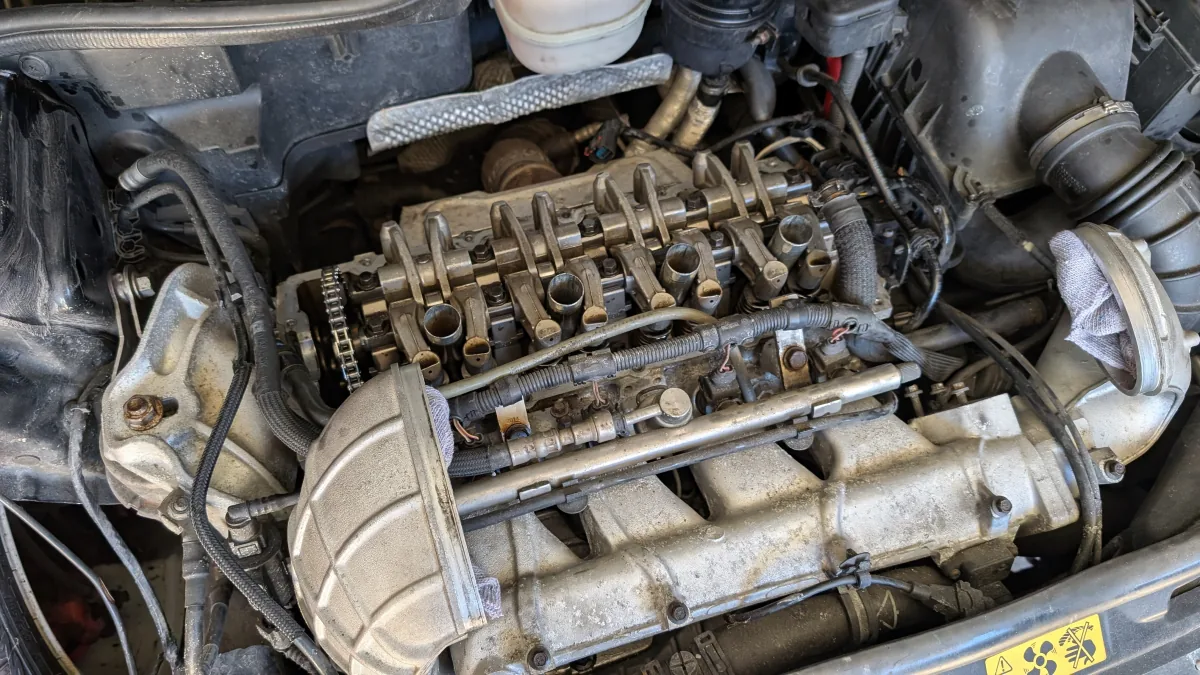
The curiosity about what had happened to that engine wouldn't leave my head. I wanted to make progress, take it apart and see for myself what state it was in. I started at the top: I removed the cover to inspect the cylinder head and look for any damage or clue pointing to the fault. Everything in that area looked fine — the spark plugs a bit black, but nothing out of the ordinary.
The next step was to try to turn the pulley with a ratchet to check whether the engine turned over. After a short travel it would snag. I cut the belt to free it and see if it turned more freely that way — and it did. The hope that it was something minor started to grow.
However, when I took out the oil filter I noticed it was crushed. It didn't look good. I drained the oil and, at least, that looked fine: clean, no metal debris in sight.
Bit by bit I kept removing parts, and more parts. In the end the plan was to strip it completely: both to gauge the real extent of the fault and to renew whatever was needed and leave the engine in top condition.
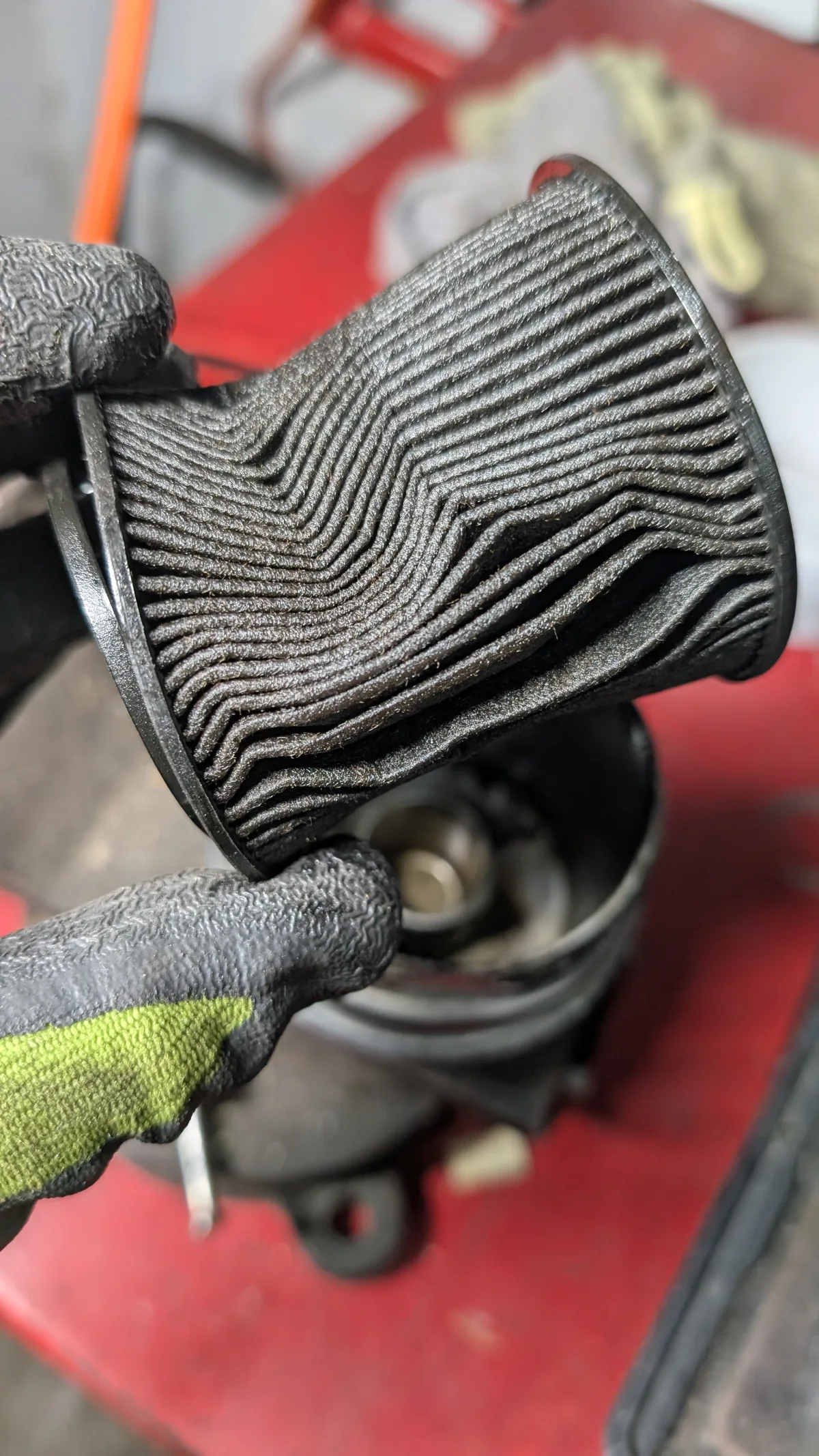
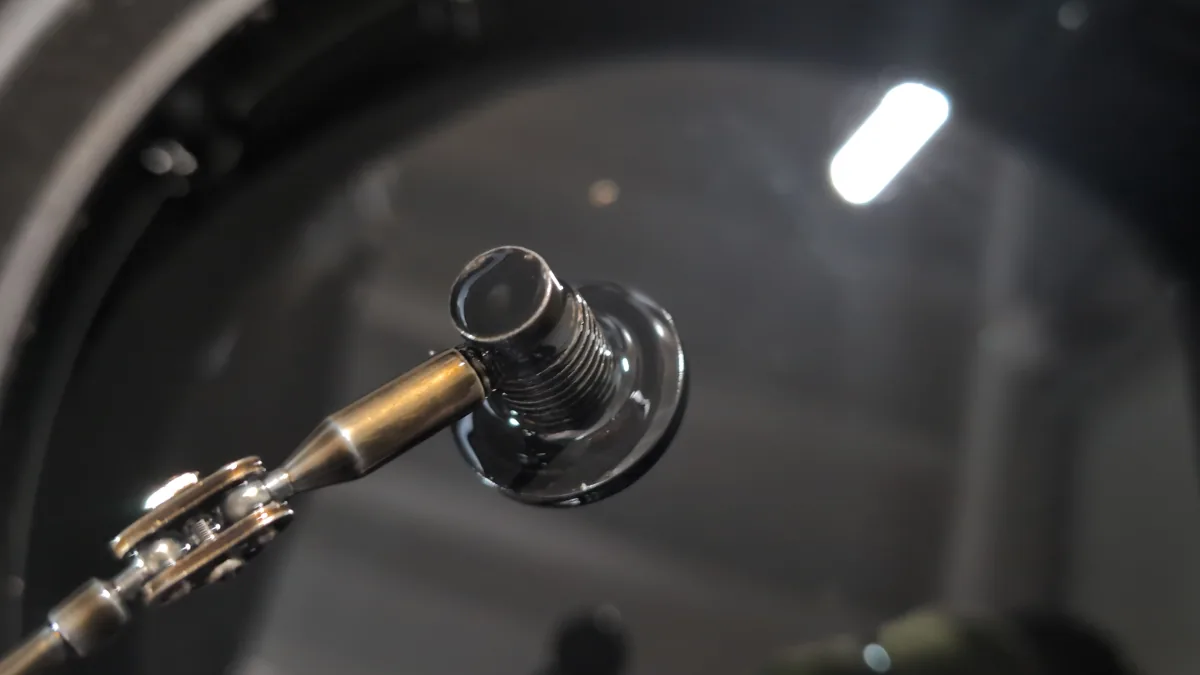
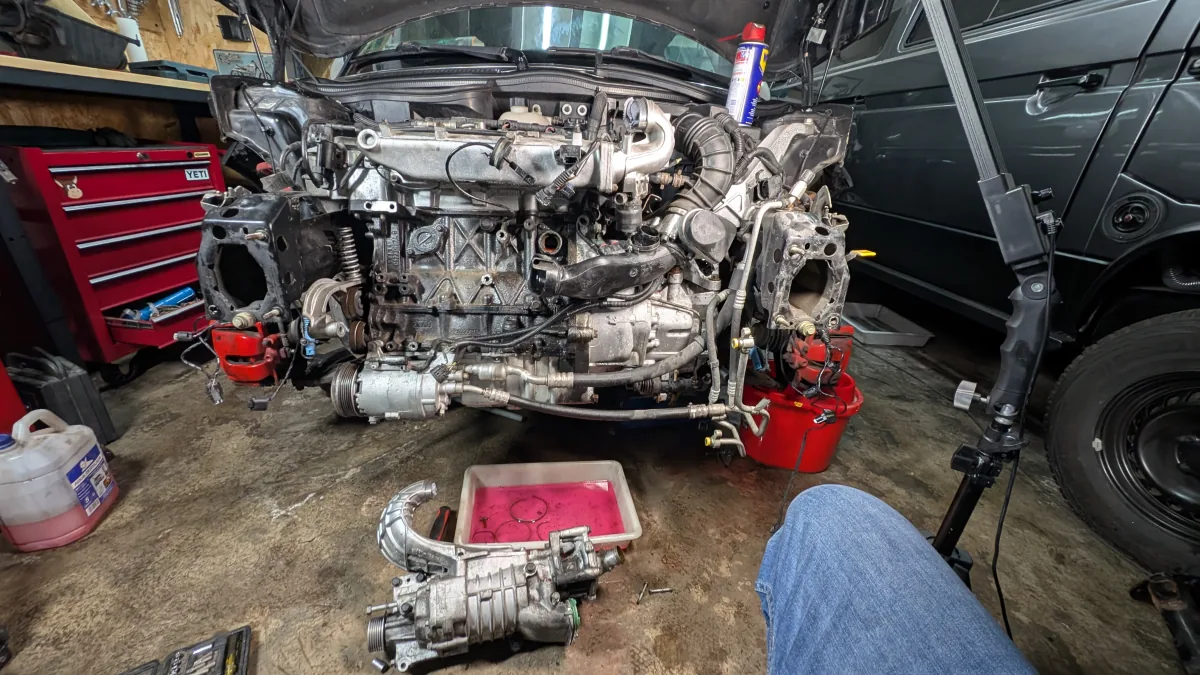
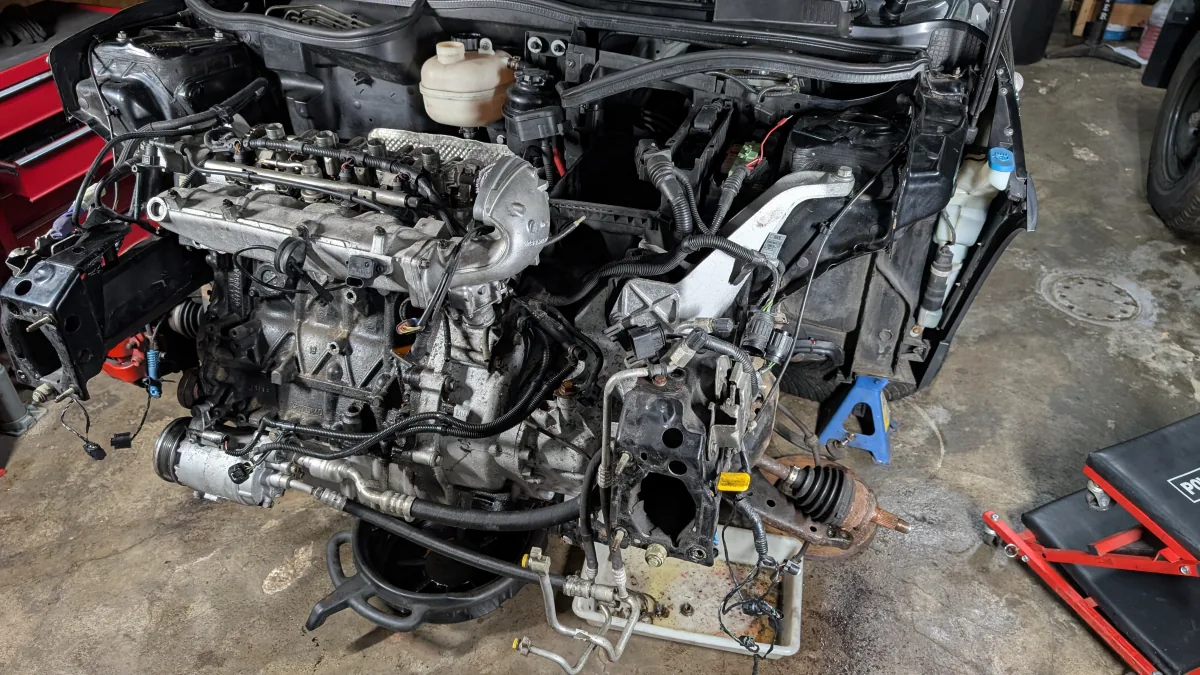
To be continued…
06
I found the engine problem
February 2026
→ Next step
Coming soon.

06 — Contact
Do you share the passion for the Mini R53?
Follow the restoration or tell me your own Mini story.